Let’s face it: Potty training is tough. For many parents, trying to help their children transition from diapers to “big boy or big girl” pants is similar to the first few sleepless weeks after birth. You may find yourself asking, “Will this ever end?”
At The Gardner School, we want to be proactive about partnering with parents to make it an easy transition for everyone involved. While each child is different, there are several tips we encourage parents to consider to make the potty training transition process a little easier
1. Look for signs your child is ready
There is no “right” age to start potty training your child. It’s a process that requires your little one to develop a complex set of skills. You’ll likely sense when your child is ready, but here are some signs that your child may be ready to ditch their diaper:
- They can express interest in toilet training by talking about it or by following you to the bathroom.
- They can communicate the need or activity of going to the bathroom, either by verbalizing it or showing you through their facial expressions.
- Your child notices and doesn’t like wet or dirty diapers. They may start removing their diapers or want you to change them right away after they go.
- Your child can follow simple instructions and likes to copy your behavior, including bathroom habits.
- They can keep their diaper dry for at least two hours.
- They are showing increased independence.
- They have the ability to follow simple one and two-step instructions.
2. Pick a potty and get started
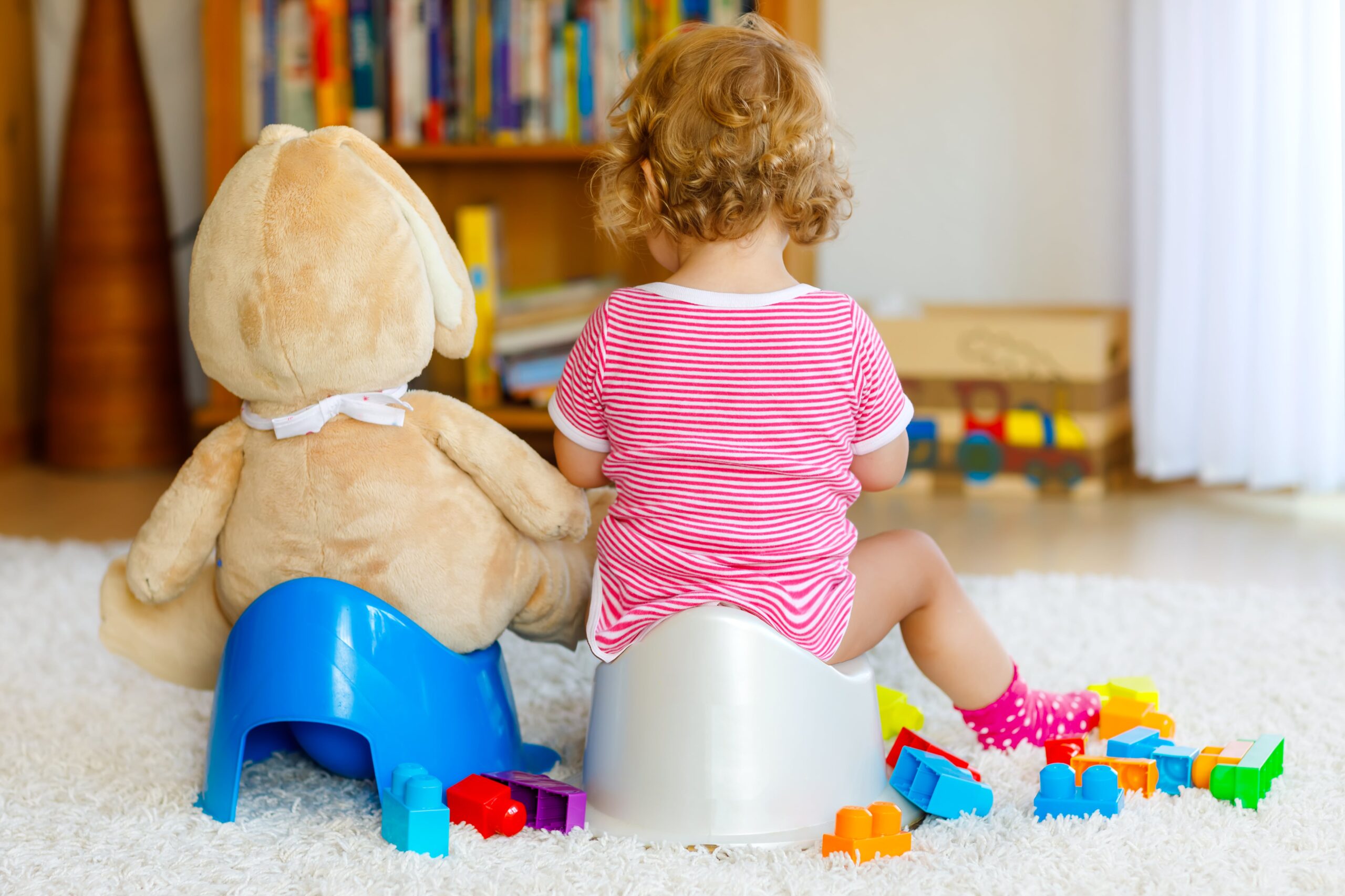
Once your toddler has shown signs of readiness, it’s time to start potty training. Get a potty training seat to fit on your toilet seat, or use a standalone toddler-size potty chair. You might also switch from diapers to pull-ups. Pull-ups feel more like underwear but are still absorbent and easy to pull up and down. Follow these next steps to start the potty training process:
- Let your child sit on the potty fully clothed while you talk to them about the potty and what it’s for.
- Once your child is sitting on the potty by themselves without being prompted, you can try getting them to sit there with their diaper off. Make it a routine that the two of you do together. You could start by having them sit on the potty before bath time each night and then add additional opportunities.
- Don’t make your child sit on the potty against their will.
- Watch closely. Look for signs that they may need to use the restroom, such as fidgeting or straining, and then prompt them to ask if they need to use the potty. Even if it’s too late, have your child sit on the potty anyway to reinforce the connection.
- Once your little one has enjoyed a few successes on the potty, try switching to washable cotton training pants.
3. Practice patience and use praise
Most children aren’t ready to start potty training before the age of two, and some may wait until just past their third birthday. So be sure not to push your child into potty training before they’re ready. It can also take three to six months to fully train your toddler, and it can take months or years to master staying dry at night. Rather than trying to accomplish potty training in a week or over a weekend, set weekly milestones based on their readiness. For example, you might want to encourage your child when they share they’ve used the bathroom in their diaper. Next, work on milestones like pulling up their pants on their own. Potty training is a process, and patience is a virtue.
Making a big deal about the small steps along the way is a great way to encourage your child. Praise all attempts to use the toilet, even if nothing happens. And don’t forget to pat yourself on the back for helping to teach your child another step in the journey of growing up! Check out this blog for different ways to celebrate your child’s milestones.
4. Be consistent with your timing and routine
Routine is important for helping children grow and develop. This is just as true for potty training. Establish a routine, and try to be consistent. Whatever you do at home with your potty training plan, you should also do elsewhere for extra reinforcement.
TGS Shares Resources To Support Parents
Be sure to check out our other potty training resources to support you with potty training. Having a childcare partner who understands children’s growth and development can help you feel even more supported as a parent.
Supporting parents with potty training is just one of the ways The Gardner School works to support our families. To learn more about The Gardner School and the advantages of an academic preschool, visit our website or schedule a tour today!