

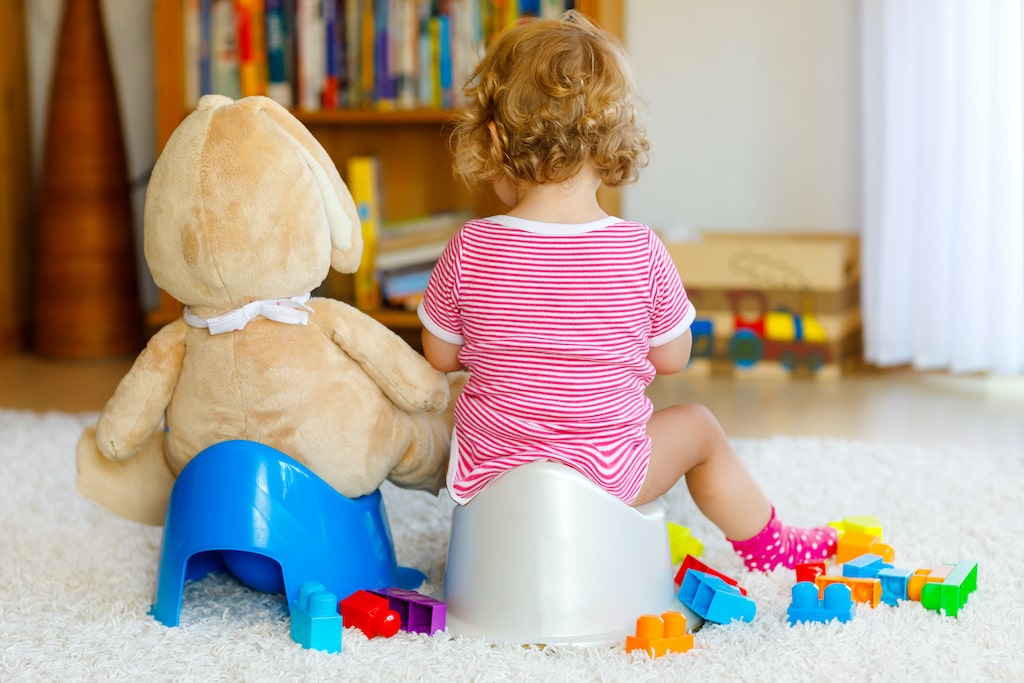
Potty training is a huge toddler milestone, and like any major skill, there are so many different opinions, methods, and techniques for how to approach it. Some experts champion elimination communication, a non-diapered approach that starts at birth. Others suggest the “wait and pee” method to gently transition kids into toilet training. There’s even a three day marathon-style method that promises freedom from diapers in just one long weekend. Whichever approach you take, it’s a process that takes time and patience.
For busy, working parents, having the hours needed to dedicate to potty training can be a challenge, as some parents have even taken days off work to help their children learn the basics. Especially in 2020 and into 2021, many parents are working remotely or have adopted more flexible hours. With the majority of activities taking place at home, it’s a great time to start the potty training process. Here are our tips for making potty training a successful, positive experience.
1. Identify the reasons why you’re ready to potty train.
It can be tiring to change diapers daily and expensive to keep a constant supply on hand. As your toddler grows, you may be eager for them to transition into using the toilet. If you’re lining up childcare for your toddler, this milestone might be even higher on your list. Remember that just like other developmental milestones, potty training readiness varies from child to child. They may be ready far before their same-age peers, or it may take some time before they’re ready.
2. Observe your child’s readiness for potty training.
Even if you’re eager to start the process, observe the signs for when your child is ready to begin. Some signs that children may be ready are when you hear them announce they’re going to the bathroom or when they follow you or a sibling to the toilet. They may ask questions or show interest in the process. If children’s diapers stay dry for several hours at a time, this is a physiological sign that they’re developing greater bladder control. All these indicators may be signs that they’re ready to proceed.
3. Take potty training step by step.
You can create positive anticipation for this milestone by treating it with excitement. You can read your child books about potty training or show them a television episode about it that features a favorite character. Together, you can go shopping for children’s underwear in a pattern or color they like. Once kids are feeling excited about potty training, you can get the ball rolling by asking them to tell you when they’ve gone to the bathroom or when they feel like they need to go. This will help them start to identify the physical urge to go to the potty, which is the first step in the training process. Star stickers on a shirt or a piece of paper are a great way to celebrate this step. Once a child can identify the urge to go, you can start trying out underwear for a few hours at a time. Changing the physical sensations associated with needing to go to the potty can help kids become more aware of when they need to go.
4. Pile on the encouragement.
Learning a new skill isn’t always easy, so it’s important to build in lots of tangible rewards and progress tracking to help kids see how their mastery grows. When accidents happen, (as they surely will) let your child know that it’s not a big deal. Clean them up, change into new undies, and start the process again. Have faith in your child and trust in their ability to do this. If you notice resistance or frustration, it might not be the right time for your child. It’s okay to step away, return to diapers, and try again in a few days or weeks. When adults learn new skills, it takes many iterations before they become comfortable and proficient. The same is even more true for children, whose brains are growing and developing exponentially.
A Parent Partner for Kids’ Most Important Milestones
The Gardner School supports parents as they navigate so many key milestones with their children—including potty training during the school day to complement the training at home. Having a childcare partner that understands children’s growth and development can help you feel even more supported as a parent. To learn why parents choose The Gardner School for their children to grow and learn, contact us to learn more or to schedule a virtual tour.