

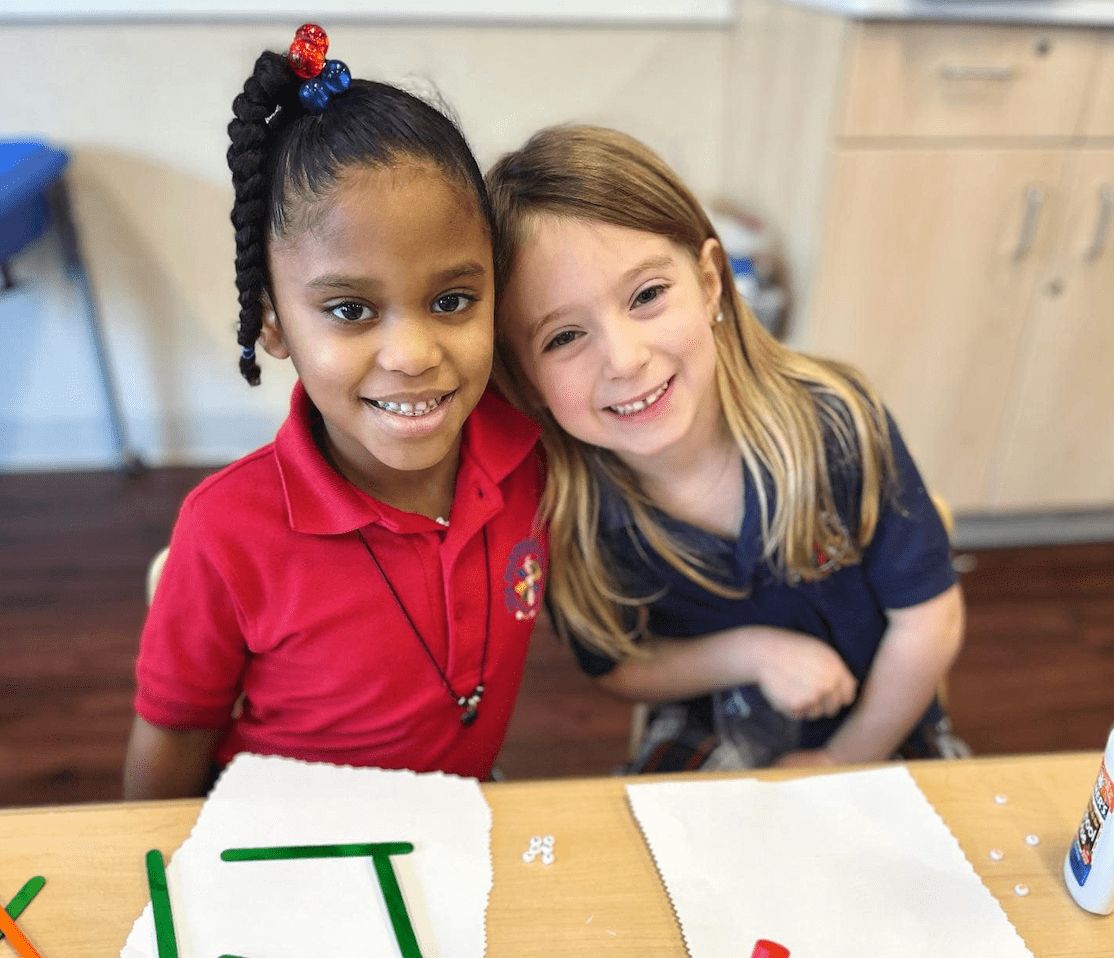
Numerous studies have shown that strong friendships lead to improved physical health, mental health, resilience, and meaning. Like many other skills, children learn about friendship and how to interact with one another at a very early age. These relationships provide opportunities for little ones to learn about themselves, have fun, and feel connected to a community. And similar to letter recognition and fine motor skills, social skills can also be practiced and improved!
If you’re looking for ways to cultivate your toddler or preschooler’s relational skills, here are four ways you can use to teach your child to be a good friend:
Talk About Your Own Friends
Children learn by watching more than listening. While that’s easy to see in terms of concrete developmental stages like walking, talking, or reading, it’s also true of “soft” skills like listening, communicating, and sharing. You can help your children learn more about friendship by talking about and spending time with your own friends. Tell your children what you appreciate about your friends and also explain how you know your friend is a good friend. With help from you, your child will be able to identify the qualities they’re looking for in a friend and how they can be a good friend to others.
Provide Opportunities for Play
The best way to make new friends is by intentionally finding ways to connect with people and experience new things. The more opportunities your child has to meet other children, the more adept they’ll be at creating and maintaining friendships. Your child can meet others through visits to the library, the playground, a community center, their preschool, or at events for families. If your schedule allows, plan one-on-one time for your child and their special friends. For infants and toddlers, parallel play can help with early social development.
Prioritize Early Childhood Education
Early childhood education centers like academic preschools can help increase your child’s social capacity and confidence. Since friendship is a skill that needs practice, daily interactions with their peers can help your preschooler learn how to be a good friend to others. At preschool, they can practice sharing and saying kind words. Frequent social interactions are extremely beneficial to help your child develop these important social-emotional skills.
Read a Book About Friendship
There are so many books dedicated to helping children understand how to develop friendships, and all of them have value. When it comes to titles that resonate with preschoolers, our teachers have a few favorites they come back to again and again.
This one is a classic for a reason! The Frog and Toad duo have been teaching children about friendship since the book was published in 1970. With their different personalities, Frog and Toad have to make an effort to understand each other in order to connect. This is a wonderful book for helping children understand that differences make us unique.
David Wisener’s tale of a talented lizard named Arthur and his friend, Max, who wants to be just like his best friend, Art. This book can help children understand why we want to be like those we admire, and how a new perspective can help shake up our world.
Sometimes friends move away or go to a different school. To help children process the big emotions that can accompany this experience, this book provides a path forward. Children will learn why those they love end up moving, and why big changes can be both exciting and difficult.
The Gardner School Helps Preschoolers Build Strong Social Skills
Our teachers understand the importance of social skills. That’s why we foster child-directed playtime in the classroom plus ample indoor and outdoor play so that children can build friendships and practice communicating with each other. Contact us today to learn more or check out our virtual tours on our website for The Gardner School nearest you. You’ll quickly see why parents choose The Gardner School to help build friendly, compassionate, and engaged young learners.