

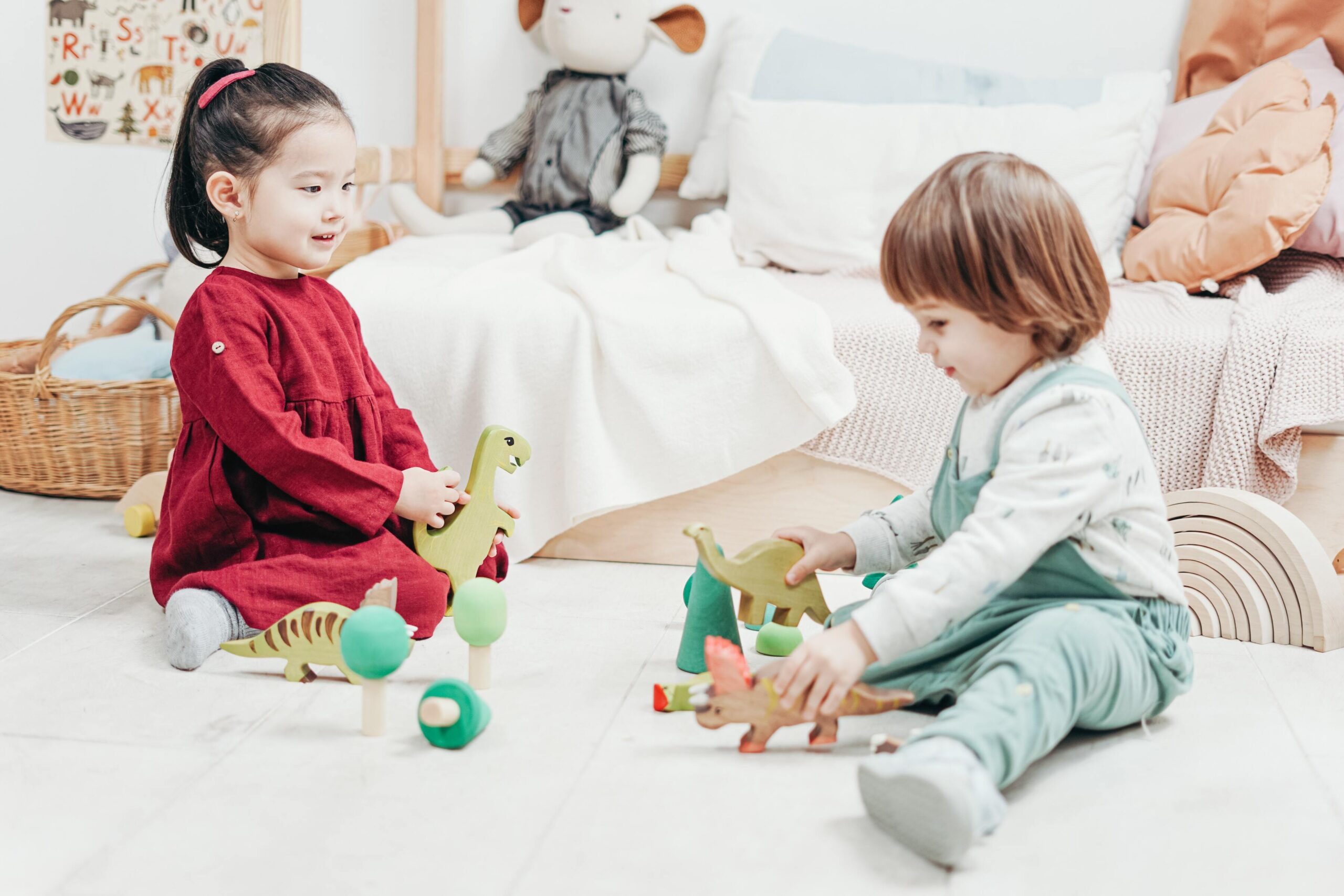
An important part of preschool learning consists of basic academic skills like letter and number recognition. Recently, preschools have also begun implementing activities and strategies to encourage Social-Emotional Learning skills, or SEL skills, in the classroom. SEL gives children the capacity to navigate the social world and words to express their interior feelings. For kids, understanding their emotions and the emotions of others can be deeply empowering. We wanted to offer a few SEL activities you can do at home to help build SEL skills in your preschooler.
1. Point Out Positive Social Interactions
When you notice positive SEL behaviors like sharing, empathy, and kindness, let your child know you notice how they treat others. You can point out the behavior right when you see it (”Emma, thank you for sharing your book!”) or you can bring it up later, during dinner or at bedtime. (“I noticed you hugging your brother when he was crying today. That was very kind.”) Positive verbal responses go a long way in reinforcing SEL skills.
2. Establish Daily Emotional Check-Ins With Your Child
Many classrooms have a scheduled Morning Meeting to check in with kids about how they’re feeling that day. A scheduled Morning Meeting can allow space for kids to share updates or challenges and receive empathic feedback from those around them. You can implement a Morning Meeting-style check-in to stay aware of your child’s daily experiences. This daily check-in doesn’t have to be long. In the morning, at dinner, or at bedtime, ask your child to share how they’re feeling. If you’re checking in at the end of the day, ask them to share one struggle they had during the day as well as one moment when they felt very happy or thankful. This simple five-minute exercise will help your child to develop the skills of naming emotions and reflecting on their causes.
3. Emphasize Community and Teamwork
Individual achievement is great, but working, learning, and playing together with other people can enhance your child’s learning processes as well as their emotional and social growth. Cultivate a team-based identity for your family and use this mindset to work together on a daily basis. For example, you can draft a Family Charter that lists your values, goals, and norms. You can increase communal thinking by using “we” instead of “me” and tying fun activities, like family outings, directly to teamwork your family displays while tidying up or working together. Humans thrive when they’re given a purpose and a special job to do, and kids are no different. Support their desire to help others by giving them real, authentic tasks that contribute to the good of the family.
4. Take Time for Mindfulness
Kids can move at breakneck speed, but even the speediest preschoolers need time to rest and rejuvenate. “Quiet time” is a great opportunity to teach self-regulation skills through counting breaths, listening to soothing music, or a calming audiobook. Having a break in each day for silent contemplation is an important part of brain development. Silence and reflection are also helpful during times of heightened emotions. When kids are agitated, it can be difficult for them to self-soothe. Don’t ask too many questions about their emotional state while they’re dysregulated. Instead, help them return to baseline by designing a calming corner or a Calm Down Kit with relaxing activities and comforting objects. Once they feel more at peace, encourage them to share how they felt in the moment and what helped them feel calmer.
Helping Kids Grow Academically, Emotionally, and Socially Every Day
The Gardner School understands the importance of social and emotional skills, along with academic excellence. We build responsibility and turn-taking into our daily schedule to help strengthen these skills. To understand why parents choose The Gardner School for their children to grow and learn, contact us to learn more or to schedule a virtual tour.