If you’ve toured preschools, researched early childhood education, or explored different curriculum approaches, you’ve likely come across the phrase “play-based learning.” It is one of the most common terms used in early childhood education, yet it is also one of the most misunderstood.
For some families, play-based learning sounds simple. Children playing with blocks, pretending in a dramatic play area, or exploring outdoors may not immediately look like traditional learning. Many parents naturally wonder how play prepares children for kindergarten and future academic success.
The reality is that high-quality play-based learning is intentionally designed to support cognitive, social, emotional, language, and physical development. Children are learning every day through hands-on experiences that encourage curiosity, creativity, communication, and problem-solving. The learning is real, meaningful, and often far more complex than it appears at first glance.
What Is Play-Based Learning?
Play-based learning is an educational approach that uses children’s natural curiosity and interests as a foundation for learning. Teachers carefully create environments, experiences, and opportunities that encourage exploration while supporting important developmental goals.
This does not mean children are simply left to play without guidance. Skilled early childhood educators observe, ask thoughtful questions, introduce new vocabulary, encourage collaboration, and help children make connections between experiences. Learning goals are woven into activities in ways that feel engaging and developmentally appropriate.
“Families are sometimes surprised to learn that many of the skills associated with kindergarten readiness are developed through play,” Emily Davidson, Executive School Director at The Gardner School of Chicago-Ravenswood. “When children collaborate on a project, negotiate roles during dramatic play, or solve a problem together, they are building communication, self-regulation, critical thinking, and persistence. Those skills are every bit as important as early academic knowledge because they help children become confident learners.”
Research from the National Association for the Education of Young Children (NAEYC) consistently highlights that young children learn best through active, hands-on experiences that allow them to explore concepts in meaningful ways.
What Children Learn Through Block Play
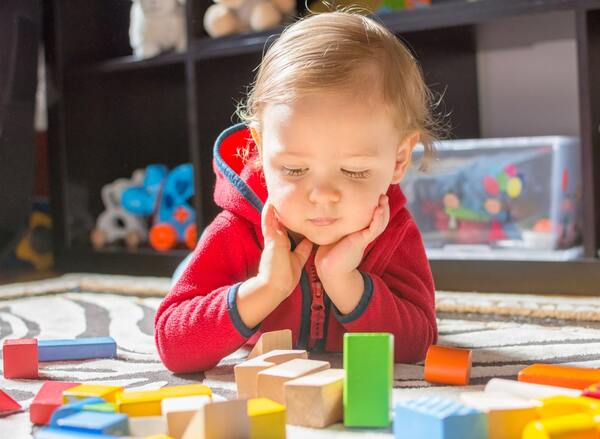
A block center may look like simple construction play, but there is often much more happening beneath the surface. As children build towers, bridges, roads, and structures, they are exploring early math concepts such as size, shape, balance, measurement, and spatial awareness. They are testing ideas, solving problems, and making predictions. When a tower falls, children evaluate what happened and decide how to adjust their design.
Block play also supports communication and collaboration. Children negotiate roles, share materials, explain ideas, and work together toward common goals. These experiences help build critical thinking skills while encouraging persistence and resilience.
Why Dramatic Play Supports Real-World Skills
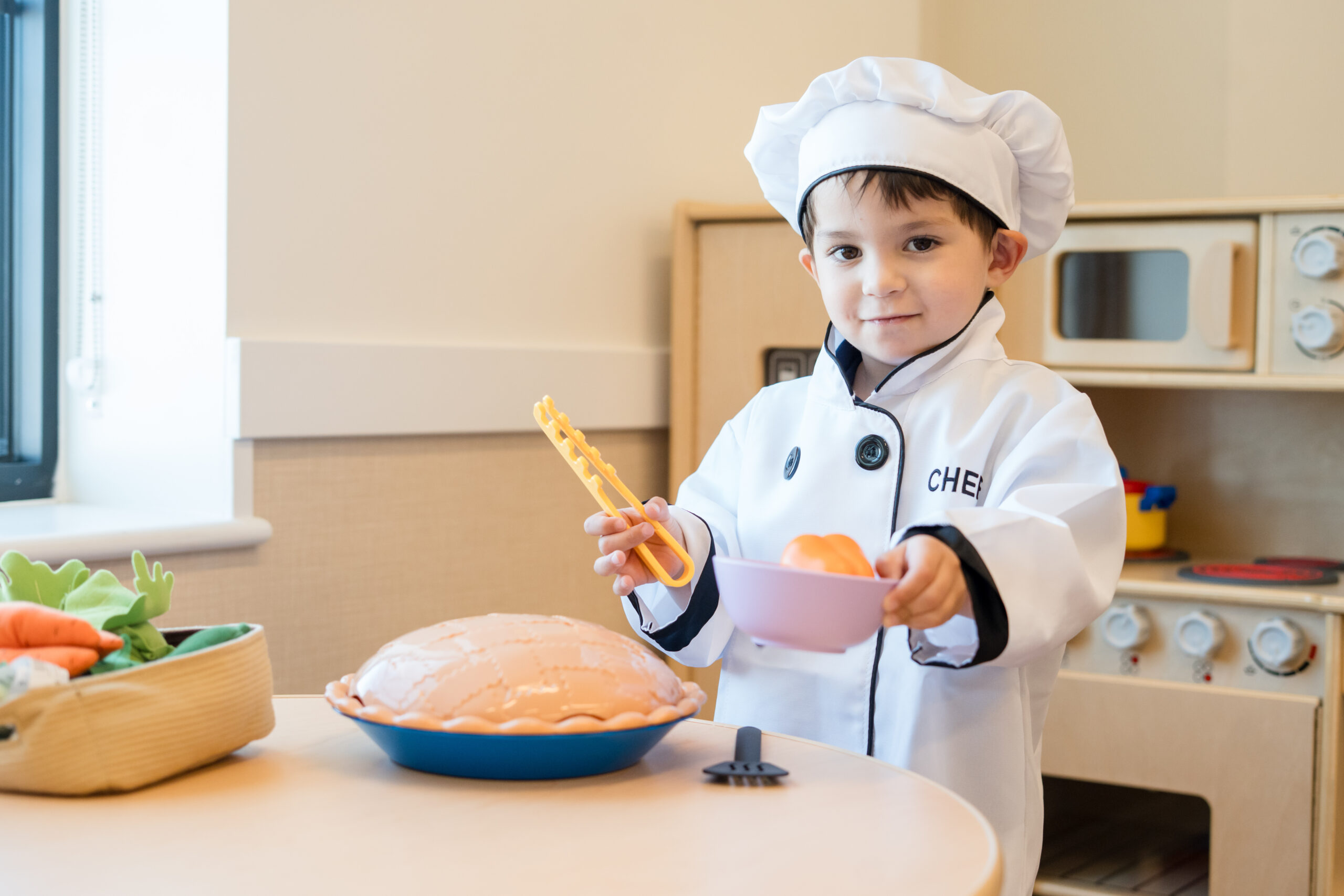
The dramatic play area is often one of the busiest spaces in a preschool classroom. Whether children are pretending to run a grocery store, care for animals, cook in a restaurant, or visit a doctor’s office, they are practicing important life skills.
Dramatic play encourages language development because children are constantly communicating, storytelling, asking questions, and expressing ideas. It also helps children develop empathy as they explore different roles and perspectives.
Many educators consider dramatic play one of the strongest tools for social-emotional learning because it allows children to practice cooperation, self-regulation, problem-solving, and relationship-building in ways that feel natural and enjoyable.
How Sensory Learning Supports Brain Development
Sensory experiences are another important part of play-based learning. Activities involving water, sand, clay, natural materials, or sensory bins allow children to explore through touch, observation, and experimentation. What may appear to be simple exploration is often supporting language development, scientific thinking, fine motor skills, and concentration. Children compare textures, notice patterns, test ideas, and develop new vocabulary as they engage with materials.
Sensory learning also encourages children to slow down and focus. These experiences often provide opportunities for sustained engagement, curiosity, and discovery that support deeper learning.
Why Outdoor Exploration Is a Powerful Learning Environment
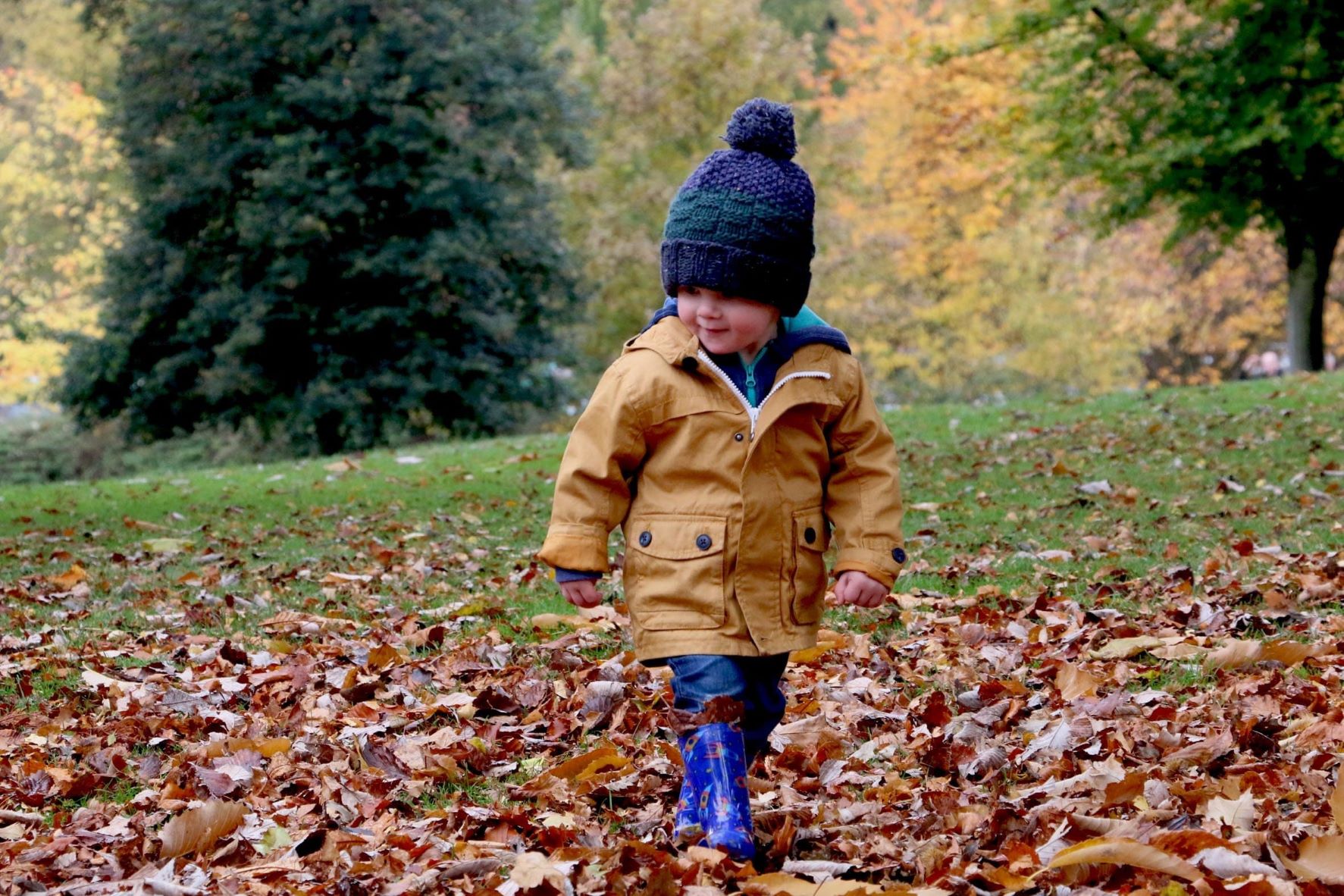
Some of the richest learning opportunities happen outdoors. Nature encourages children to ask questions, make observations, investigate patterns, and explore the world around them. Collecting leaves, watching insects, building with natural materials, or observing weather changes all support early science learning and critical thinking.
Outdoor experiences also strengthen gross motor development, confidence, and independence. Children learn to assess risks, solve problems, and navigate new challenges while engaging with their environment. These experiences often spark the kind of curiosity that drives lifelong learning.
Play Builds Communication and Critical Thinking Skills
One of the biggest misconceptions about play-based learning is that it focuses only on creativity or social development. Play is one of the primary ways young children develop communication and critical thinking skills.
When children work through disagreements, explain ideas, ask questions, test solutions, and make decisions, they are practicing the same types of thinking they will use throughout their academic careers and beyond.
They are learning how to collaborate, adapt, analyze information, and approach challenges with confidence. These skills are increasingly recognized as some of the most important outcomes of early childhood education because they support success not only in kindergarten but throughout life.
Looking Beyond the Activity
One of the best ways to understand play-based learning is to look beyond the activity itself and focus on what children are learning through the experience. A child building with blocks may be developing engineering skills, mathematical thinking, and perseverance. A child pretending to be a veterinarian may be strengthening communication, empathy, and vocabulary. A child exploring a sensory table may be practicing observation, scientific thinking, and problem-solving.
At The Gardner School, we believe learning should be engaging, meaningful, and rooted in discovery. Through intentional play, trusted relationships, and hands-on experiences, children develop the confidence, curiosity, and skills that prepare them for kindergarten and for all they will become. Because when children are deeply engaged in learning, it often looks a lot like play.