

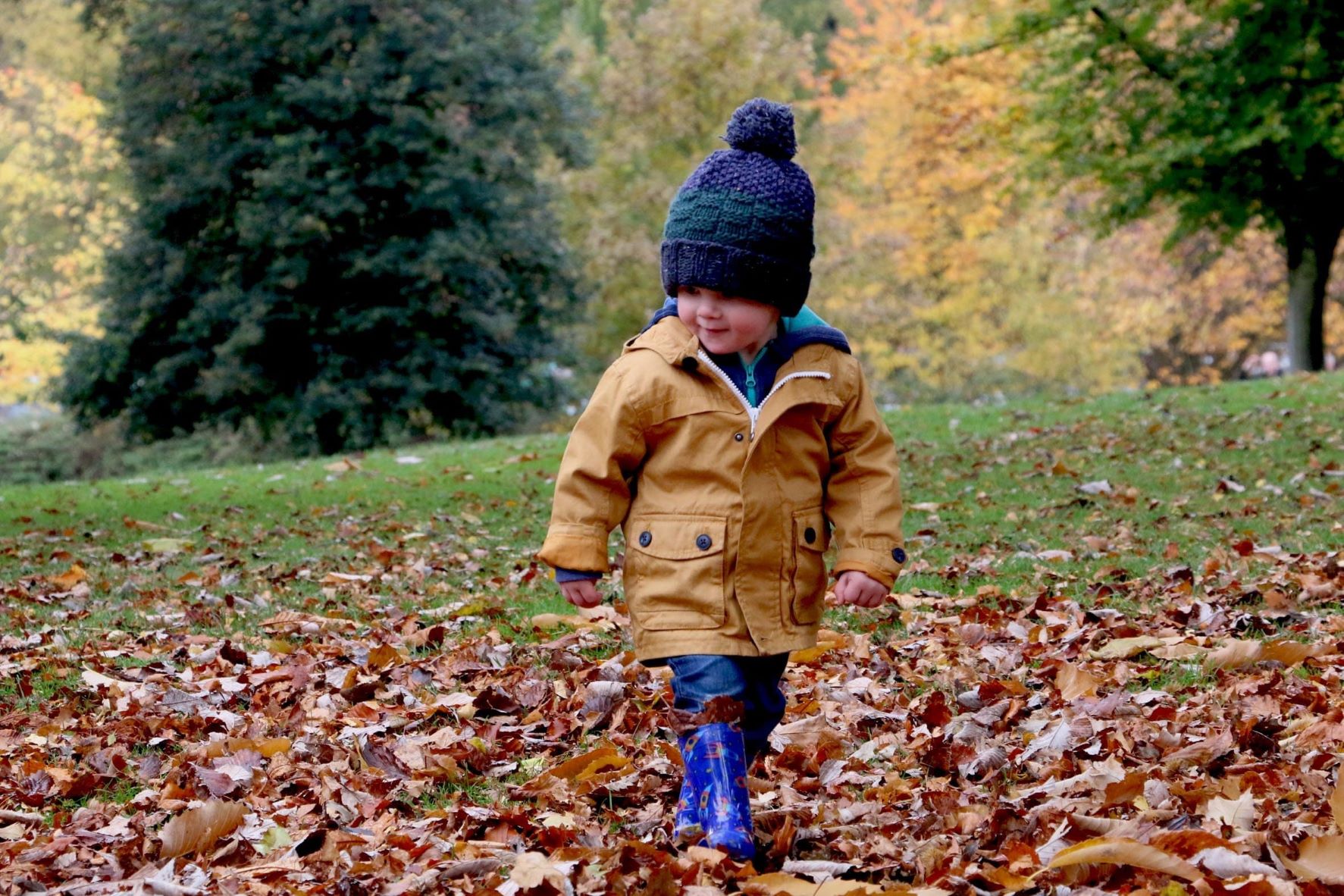
Whether you call it a ramble, a walkabout, or a hike, setting out on a short journey can help you and your preschooler connect with nature and each other. If you’re ready to plan a nature walk as fall settles in, here are a few ideas for making it a wonderful experience.
1. Consider the distance.
Little legs can only trek so far, so consider how far you’ll walk before you head out. A good rule of thumb for older preschoolers is no more than three miles for children under six. Trails that are on a loop are wonderful, although out-and-back trails should be considered as well. With either trail, you’ll want to be hiking in for about 1.5 miles and hiking out for roughly the same mileage. Keep in mind your child’s fitness and endurance level before embarking on a trail. Try out a few easy one mile walks before you level up to three miles. Of course, a nature walk doesn’t have to happen in the woods. Local parks or botanical gardens can provide just as many natural wonders in a less rural setting. Animals build habitats everywhere, so even a short walk for younger children around your neighborhood or your backyard can reveal squirrels, beautiful flowers, and birds to spot.
2. Don’t forget the drinks and snacks.
Kids need fuel to keep up their energy levels, and that’s even more true when it comes to physical activity. For snacking on the nature walk, trail mix is a time-honored tradition. (You can even have your child help you prep it the night before!) Bananas, apple slices, or pouches with pureed fruits and veggies are a quick, healthy way to stave off hunger in a low-mess way. You’ll also want to bring along ample water for your walk to prevent dehydration. Camelbaks or similar systems are a hands-free way to transport H20, and the novelty of the water-delivery system can make kids more inclined to hydrate. Small juice boxes can provide a quick burst of hydration and fuel, so they’re another choice in addition to water.
3. Find a way to capture the moment.
Technology is fantastic for grabbing pictures, video, and audio of your journey, but consider low-tech ways as well. One approach that preschoolers tend to love is starting a nature journal to catalog your findings. After each walk, you can write down the species you encountered and use washi tape to stick down any collected items. You can also encourage your child to pick up fallen leaves, acorns, sticks, and stones as treasures to display on a mantle, the dining room table, or a shelf after your trip. To prevent the buildup of too many nature souvenirs, make a ritual of switching out older artifacts for new ones from each nature walk you take. You can burn, bury, or set aside the old moments in your yard to make space for new discoveries.
4. Use fall leaves in arts and crafts.
On nature walks in autumn, it’s a child’s natural impulse to collect beautiful fall leaves. How can you preserve their beauty to last past the end of the season? Ironing fall leaves between two sheets of waxed paper can seal and set the color of all types of leaves. These laminated leaves can then be used to make garlands, wreaths, and other fall crafts your child will love. You can also create texture art with leaves and other items by placing paper over the items, rubbing the side of a crayon over the paper, and seeing what patterns emerge.
5. Make it a teachable moment.
Being outside is a wonderful opportunity to learn all types of species, from flying birds, fluttering insects, and flowering plants and trees. You can bring along a small nature guide to learn more about what you spot or download a mobile app like iNaturalist or PlantSnap to identify your favorite finds. You can also simply enjoy time together in a beautiful space and create some memories.
Choose a Preschool That Connects Your Child to the World
The Gardner School prioritizes outdoor play so that little ones experience the natural rhythms of the world outside. We also use a hands-on learning curriculum so that our students have direct experience with the concepts they’re discovering. To learn more about how we engage our littlest learners, reach out for an in-person or virtual tour at The Gardner School nearest you. You’ll quickly see why parents choose us for their child’s care!