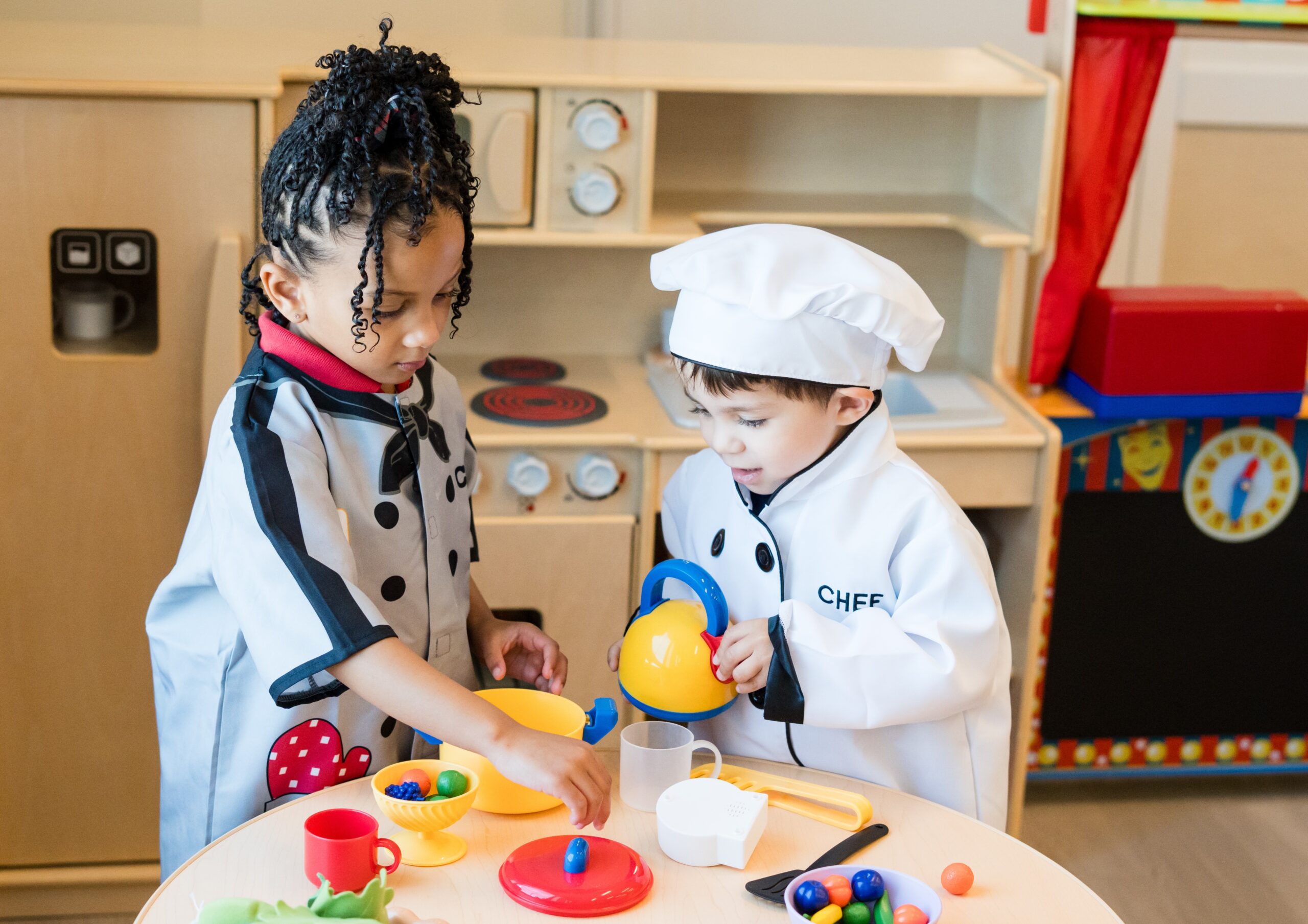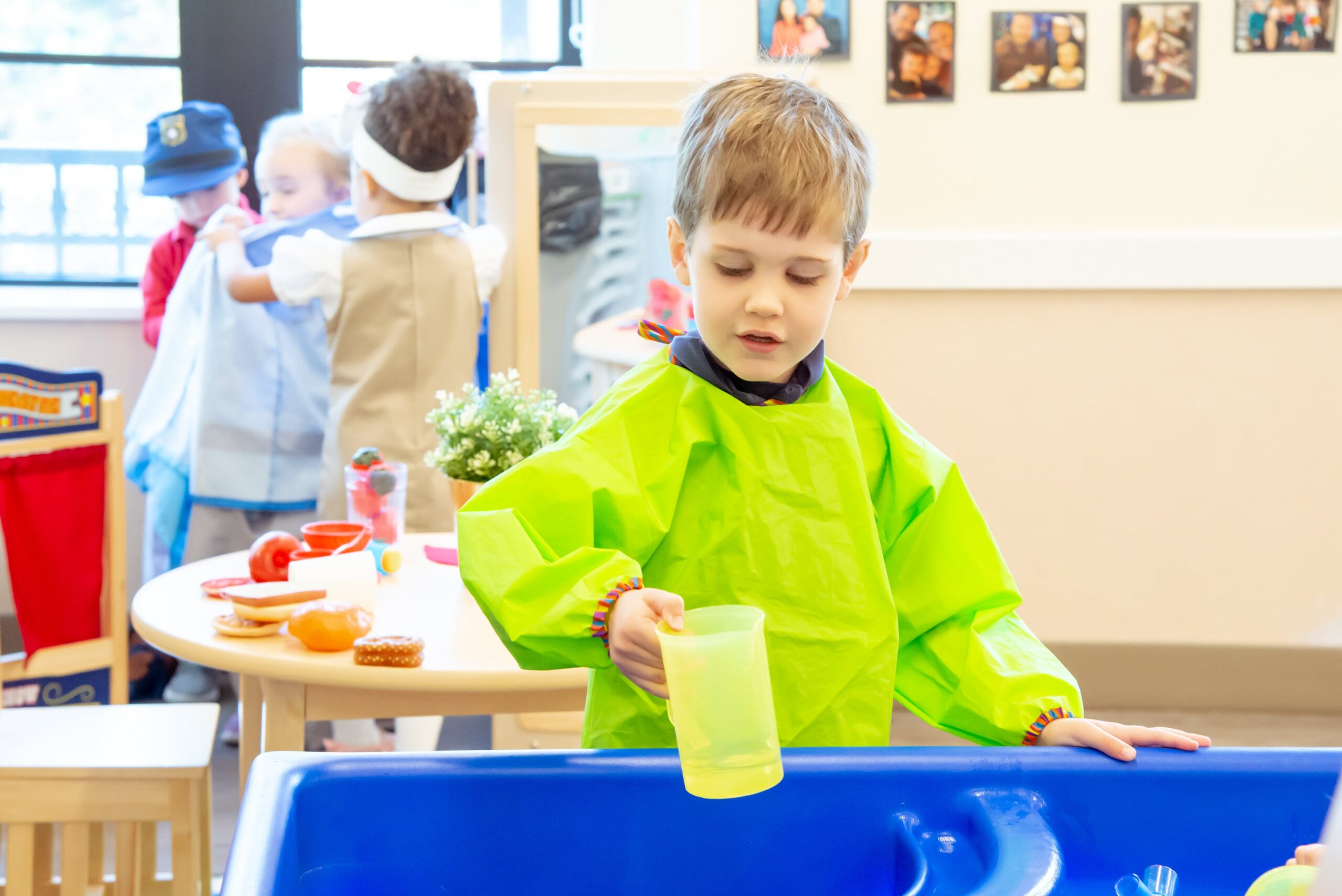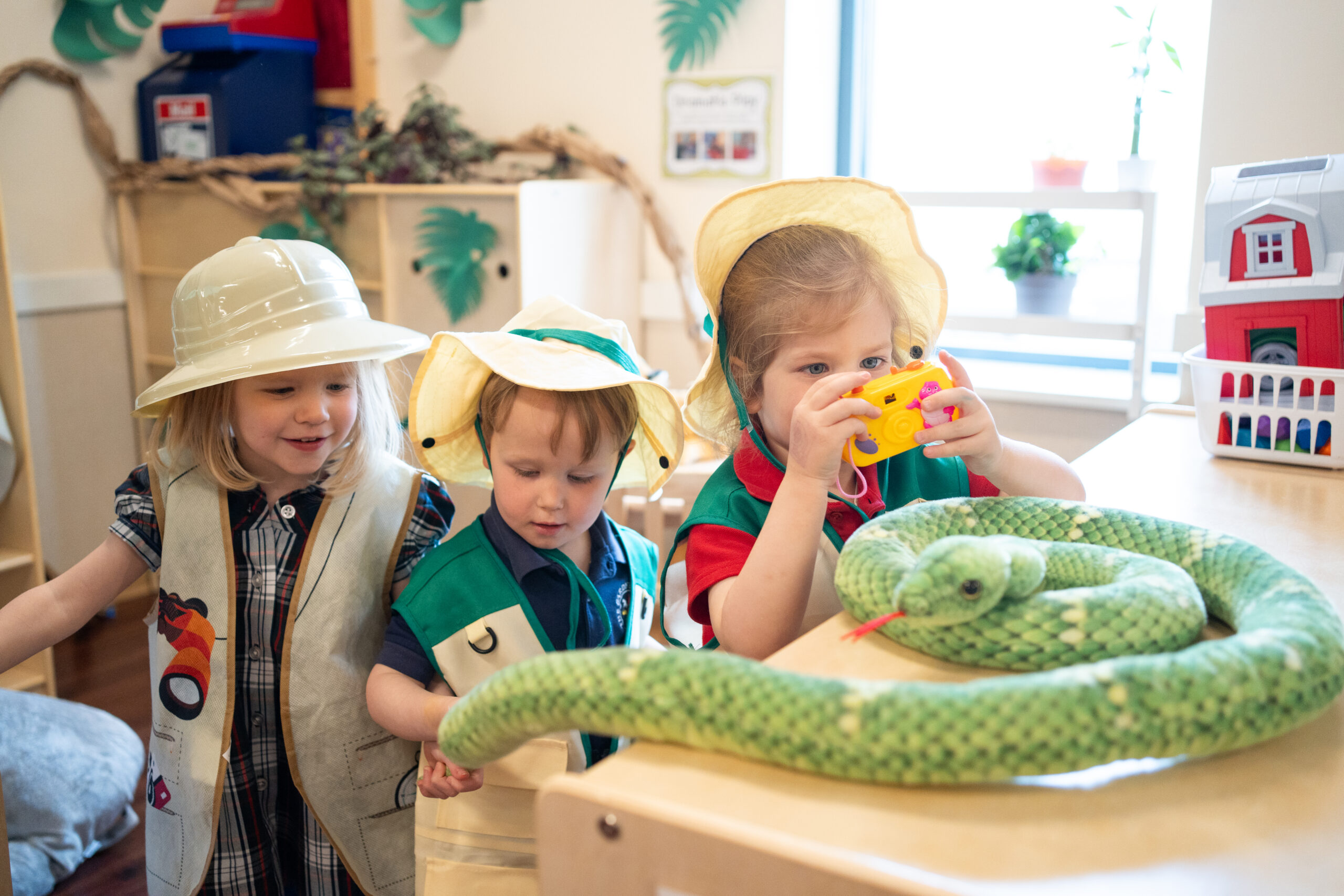
Building a blanket fort. Running a pretend restaurant. Caring for a baby doll. Piloting a cardboard spaceship to the moon. To a preschooler, these moments are exciting adventures filled with imagination and discovery. To an early childhood educator, they’re also powerful learning experiences.
Pretend play is far more than entertainment. It helps children develop language, confidence, creativity, emotional understanding, problem-solving skills, and the ability to work with others. During the preschool years, these playful experiences build important foundations that support learning in school and throughout life.
Pretend Play Helps Children Make Sense of Their World
Young children are naturally curious about the people and experiences around them. Through imaginative play, they begin exploring real-life situations in ways that feel meaningful and familiar. A toy kitchen becomes a family dinner. A doctor kit becomes an opportunity to care for a sick teddy bear. A collection of blocks transforms into a neighborhood filled with homes, schools, and parks.
As children take on different roles, they practice new vocabulary, express ideas, and explore emotions. They also begin understanding different perspectives by imagining what someone else might think or feel. These experiences help children develop empathy while strengthening communication and language skills.
Big Thinking Happens During Small Moments
Pretend play may look spontaneous, yet there’s remarkable thinking happening beneath the surface. Children make plans, solve problems, negotiate roles, and adapt their ideas as their play unfolds. Every new scenario encourages flexible thinking and creativity.
One child may decide the blanket fort needs another entrance. Another suggests turning it into a veterinarian’s office instead of a castle. Together, they collaborate, make decisions, and discover that great ideas often grow through working with others.
“One of my favorite moments to observe is when children’s imaginations take over,” says Lindsey Mayer, Executive School Director at The Gardner School of Lake Elmo-Woodbury (MN).”A simple idea can quickly become a restaurant, a doctor’s office, or an adventure to outer space. What parents may not realize is just how much learning is happening during those moments. Children are listening to one another, negotiating roles, solving problems, expanding their vocabulary, and learning to see the world through someone else’s perspective. As educators, we thoughtfully create environments that encourage this kind of play because we see every day how it builds confidence, creativity, and the social skills children will carry with them long after preschool.”
Imagination Builds Confidence
Pretend play gives children opportunities to make choices, lead activities, and test new ideas in a safe environment. There isn’t just one right answer or one correct outcome. Children are free to experiment, adjust their thinking, and try something new.
That freedom helps children develop confidence in their own ideas. As they create stories, solve challenges, and navigate play with friends, they begin trusting their abilities and discovering that learning is an exciting process of exploration.
Friendship Grows Through Shared Play
Many of the social skills children develop during preschool are strengthened through imaginative play. They learn how to invite someone to join, listen to another person’s ideas, share materials, and work together toward a common goal. Even simple conversations like deciding who will be the chef or the customer become opportunities to practice communication, cooperation, and creative problem-solving.
The American Academy of Pediatrics also highlights pretend play as an important part of healthy child development, noting that imaginative experiences help children build friendships, express emotions, and see the world from another person’s perspective.
Simple Moments at Home Make a Big Difference
Parents don’t need elaborate toys or carefully planned activities to encourage imaginative play. Some of the richest learning experiences begin with a cardboard box, a few stuffed animals, dress-up clothes, or everyday household items that invite creativity. The goal isn’t to direct the play. It’s to create opportunities for children to imagine, explore, and lead the adventure themselves.
Here are a few simple ways to spark imaginative play at home:
- Turn a laundry basket into something new. One day it’s a hot air balloon. The next, it’s a fishing boat or a race car. Let your child decide where the adventure goes.
- Create a “loose parts” basket. Save items like cardboard tubes, fabric scraps, paper towel rolls, clean lids, small boxes, and ribbons. Children often transform ordinary objects into extraordinary creations.
- Invite your child to become the teacher. Ask them to read a favorite book to you, lead circle time for stuffed animals, or show you how to complete an activity. Teaching builds language, confidence, and creativity.
- Bring real life into play. Set up a pretend veterinarian clinic, bakery, farmers market, or camping trip using items you already have around the house. Children love recreating experiences they’ve had with the people they love.
- Leave the ending open. Instead of asking, “What are you building?” try asking, “Tell me about what’s happening here.” Open-ended questions encourage children to expand their ideas, explain their thinking, and keep the story going.
Play Today Builds Skills for Tomorrow
Every pretend picnic, puppet show, grocery store, or superhero adventure is helping children develop skills they’ll use long after preschool. Communication, creativity, problem solving, collaboration, and confidence all grow through joyful experiences that encourage children to imagine, explore, and connect with others.
At The Gardner School, we believe learning is most meaningful when children are actively engaged, encouraged to wonder, and supported by caring educators who understand the power of purposeful play. Those everyday moments of imagination help build the confidence, curiosity, and lifelong love of learning that prepares children for all they will become.