You see it in the small moments. A toddler offering a toy. A preschooler patting a friend’s back. A child proudly saying, “I helped.”
Many parents search for answers like, “How do I raise a kind child?” or “Does preschool help with empathy?” The truth is, kindness is not simply a personality trait. It grows through early childhood development, responsive relationships, and intentional preschool experiences that support social and emotional learning.
How Child Care Helps Develop Kindness in Children
High-quality preschool programs are designed to nurture social skills alongside academics. Emotional intelligence, cooperation, and being a good friend are practiced daily, not occasionally.
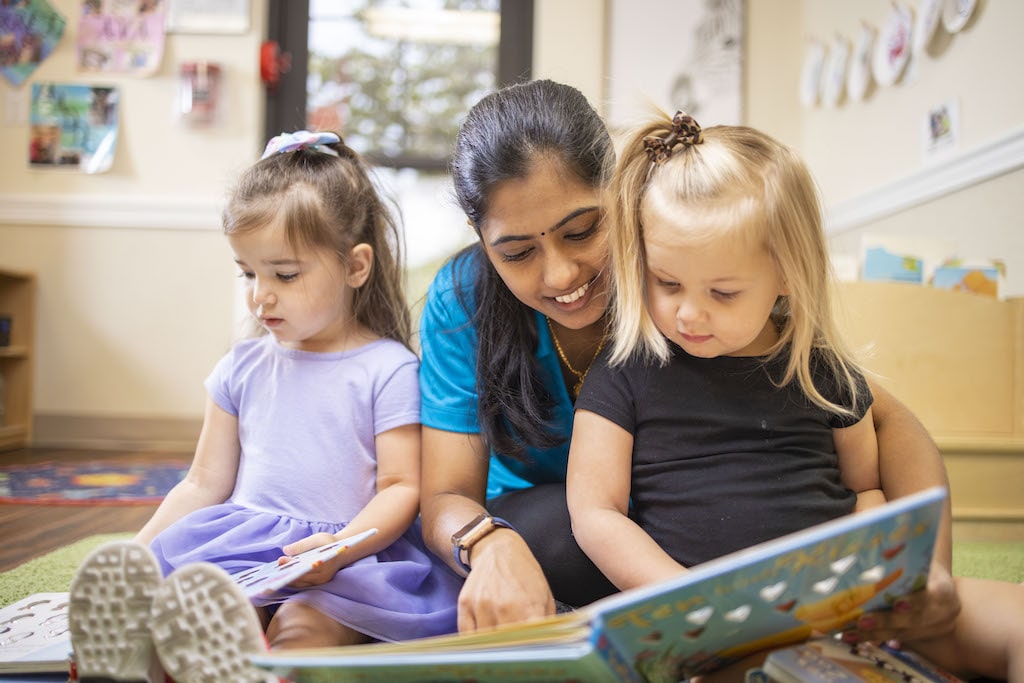
In a nurturing child care environment, children learn caring actions through:
- Guided peer interactions
- Teacher modeling of respectful language
- Daily routines that encourage cooperation
- Conversations that name feelings and experiences
According to Zero to Three, empathy develops gradually as children learn to recognize and respond to emotions. Preschool classrooms give children daily opportunities to practice those skills. You can read more about how empathy develops in the early years on the Zero to Three website here.
When teachers say, “You look frustrated,” or “Your friend feels sad,” children begin to connect behavior to impact. Over time, they understand that their words and choices affect others. That awareness is the foundation of compassion.
Why Social and Emotional Skills Matter in Early Childhood
At a young age, learning to be a good friend goes far beyond saying the right words. Many adults instinctively prompt a child to “say sorry” after a conflict. But early childhood experts note that empathy is not built through words alone.
In NAEYC’s article “The Not-So-Magic Word,” educators explain that children develop a deeper understanding when adults guide them to recognize feelings, reflect on what happened, and repair relationships thoughtfully, rather than simply repeating a phrase. That kind of steady, intentional support is what strengthens compassion over time. You can read the full article here.
In early childhood education, developing kindness strengthens:
- Emotional regulation
- Conflict resolution
- Cooperation during group learning
- Confidence in social settings
- Perspective taking
Children who feel secure and supported are more likely to show compassion, use thoughtful words, and make helpful choices during everyday interactions.
What Teaching Kindness Looks Like in Preschool Classrooms
In preschool, teaching kindness rarely looks dramatic. It is woven into ordinary routines and gentle guidance each day.
It sounds like:
- “Use gentle hands.”
- “Let’s try kind words.”
- “You can ask for a turn.”
- “Thank you for helping clean up.”
It looks like:
- Waiting patiently
- Inviting someone into play
- Offering comfort
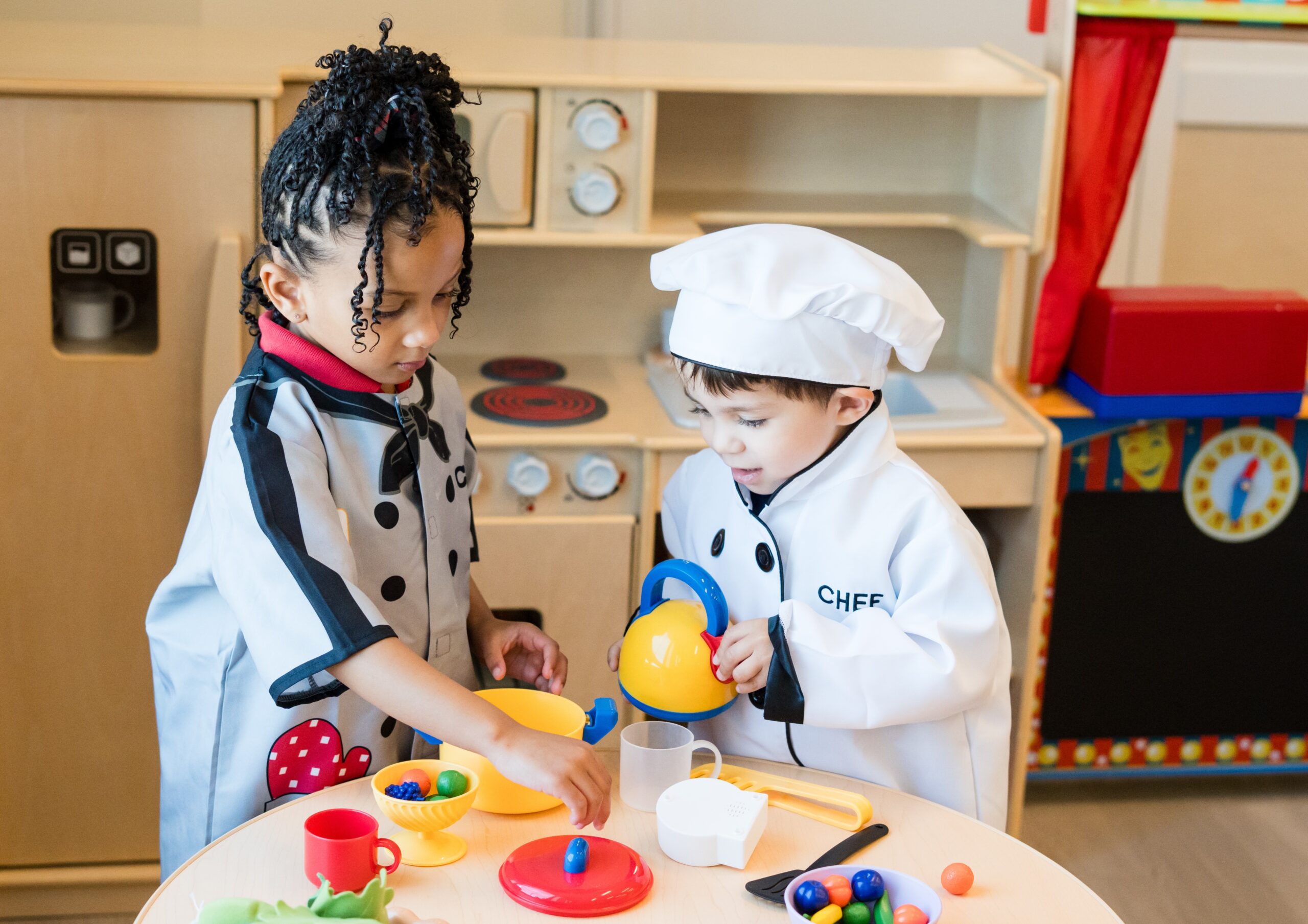
- Working together during small group activities
One intentional practice educators use is reflective language. Instead of simply praising a child, teachers describe the impact of the behavior. For example, “When you shared the blocks, it helped your friend feel included.” This strengthens social awareness and perspective, both critical parts of early childhood development.
Another insight families may not realize is how powerful peer modeling can be. Watching classmates resolve small conflicts or offer support reinforces prosocial behavior naturally. Children begin to see what it means to be a caring member of a community.
How Parents Can Support Kindness at Home
Families searching for ways to nurture compassion can begin with simple practices:
- Modeling calm problem-solving
- Naming emotions during everyday moments
- Encouraging helpful behavior
- Talking about what it means to be a good friend
When home and preschool environments share language around empathy, respect, and cooperation, children internalize those values more deeply.
At The Gardner School, developing kindness is not a seasonal theme. It is embedded in our preschool curriculum and child care philosophy. Through calm classrooms, consistent routines, and teachers who lead with warmth and intention, children build empathy, cooperation, and confidence. These early lessons shape how children relate to others and how they see themselves. They form the foundation for strong character and healthy relationships. For all they will become.
If you would like to learn more about our approach to preschool and early childhood development, we invite you to explore our programs or contact us to schedule a tour.