

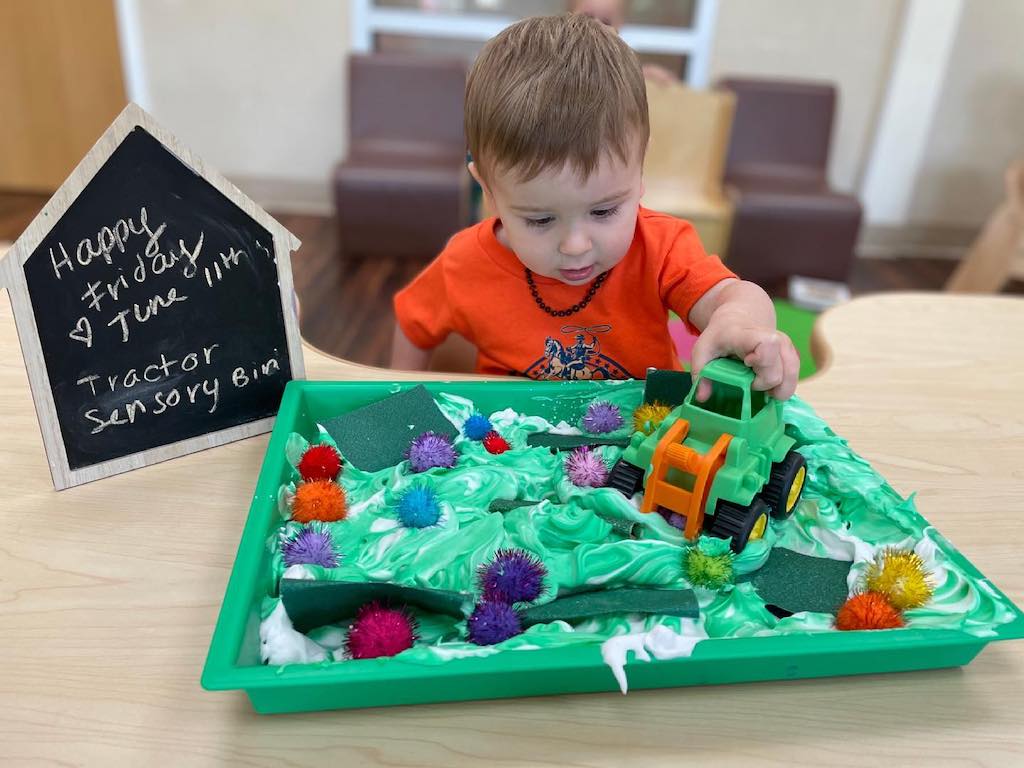
It’s no secret that preschoolers love interactive experiences, especially if it involves sensory play. From infants up to ages four and five (and even beyond), children love to discover and explore using their senses. Whether it’s touch, sight, sound, smell, or taste, there are numerous fun ways to help preschoolers experience the senses and make connections with the world around them. Careful, intentional, and playful sensory activities can also help children who have developmental or sensory processing difficulties to alleviate or overcome their fears.
If you have little ones at home, consider these no-fail activities to help children spark curiosity and engage with the senses. Even better, most of these activities can be done with common household items and within minutes.
Sensory Tubs
Perhaps one of the most popular sensory activities for both younger and older preschoolers, sensory tubs are a great way to combine all of the senses into one exploratory adventure. All you need is a small tub-like container, such as a small plastic tote or a large wash pan, and then you can fill it with a variety of sensory materials, including dry or cooked pasta, rice, or beans, play dough, sand, water, and more. Children will enjoy interacting with the tub’s elements by adding small toys, cups, or other materials. Need practical ideas? Pinterest is filled with fun sensory tub ideas!
Bubbles
There’s just something about bubbles that excites the senses. Infants and toddlers enjoy being able to grab and pop bubbles while watching them move through the air. Older preschoolers love blowing bubbles—big and small! Bubbles and bubble accessories are easy to find at just about any store where toys are sold, however, you can mix dish soap and water to create your own bubble solution. Your little ones can pour, scoop, and stir to engage a little further with the senses of touch and sight.
Shaving Cream
Not only is playing with shaving cream fun for the sense of touch, but it’s also engaging to the sense of smell. Its thick, foamy texture is ideal for little hands to explore. All you need is a can of shaving cream, a baking pan or tray, and your preschooler is good to go. Bonus idea: add in some food coloring, and task them with foamy finger painting.
Cooking
Including your preschooler in cooking activities is an easy way to engage all of the senses. Whether it’s safely cutting, counting, and sorting ingredients, exploring various food textures and colors, or performing taste tests, children can gain so much from taking part in cooking. Additionally, allowing infants to play with their food will introduce them to multiple textures that may help them with eating along the way. Bonus idea: while you’re cooking dinner, you can assign your little ones to find items lying around the house to mimic your dinner menu (i.e. building a sandwich out of pillows and blankets or making a giant bowl of soup with toys or household objects).
Sensory Bags, Bottles, and Jars
Just like sensory tubs, sensory bags, bottles, and jars can appeal to younger children’s sense of sight and touch. Especially for babies, being able to squeeze a colorful liquid or gel filled bag can be minutes of intriguing fun. For slightly older preschoolers, the visual appeal of a colorful, fizzing bottle or jar can spark lots of curiosities and questions. All you need are your unused bottles, jars, or freezer bags to fill with anything from leaves, gelatin, spare craft materials, paints, seeds, and more.
Finger Painting
An ever-classic sensory activity much like paper crafts, finger painting ignites the sense of touch and sight for curious little fingers. Sure, it’s a little messy, but the reward comes in the form of childlike pleasure and creative artwork treasures you’ll want to save for years to come. Grab some paper or cardboard and washable finger paints, and you’re on your way to minutes of sensory fun for your little one. Bonus tip: prepare the scene with newspaper or a dropcloth.
Making Music
This one requires a little extra parent patience, but music-making for preschoolers is truly a delight for their sense of sound. Children of all ages generally love hearing and singing along with music, so encouraging them to participate with sensory activities is highly encouraged. While you may or may not have musical instruments lying around the house for children to play with, you can get creative by asking your little ones to find household objects to create music with. Ideas can include pots and pans, spoons and utensils, cans and bottles, or even cardboard tubes.
See and Hear Why Parents Choose The Gardner School
At The Gardner School, we partner with parents to help children succeed at school and at home. Our goal is to help children be prepared for kindergarten and beyond. Want to see for yourself why parents choose The Gardner School over other preschools? Contact us today to schedule a virtual tour at The Gardner School nearest you. For additional sensory ideas and activities, you can also explore our Pinterest page.