You see it in the little things. A child scooting closer during story time. Offering a toy without being asked. Watching another child first, then slowly joining in. Social skills in preschoolers develop through everyday interactions, guided play, and consistent relationships with both peers and nurturing adults.
During the preschool years, social development is a key part of early childhood development and an important focus in high-quality preschool and childcare environments.
Why Social Development in Preschool Starts with Connection
Before children can share, take turns, or solve conflicts, they need to feel secure. That sense of security grows through consistent, caring relationships with adults and repeated opportunities to engage with peers. In a strong preschool environment, these moments happen naturally throughout the day, creating space for children to explore relationships at their own pace.
When children feel safe and supported, they are more willing to take small social risks like joining play, using new language, or trying again after a challenging moment. Supporting social skills in preschoolers starts with helping children feel secure, then giving them regular opportunities to interact, communicate, and build relationships.
“Social skills really grow in the in-between moments,” says Becca Zajac, Executive School Director for The Gardner School of Schaumburg (IL). “It’s not just circle time or structured activities. It’s when a teacher kneels to a child’s eye-level to help two students work something out, or when a child feels comfortable enough to try again with a friend.”
That balance of guidance and independence is where confidence begins to take shape.
What Social Skills Look Like in Preschool Classrooms
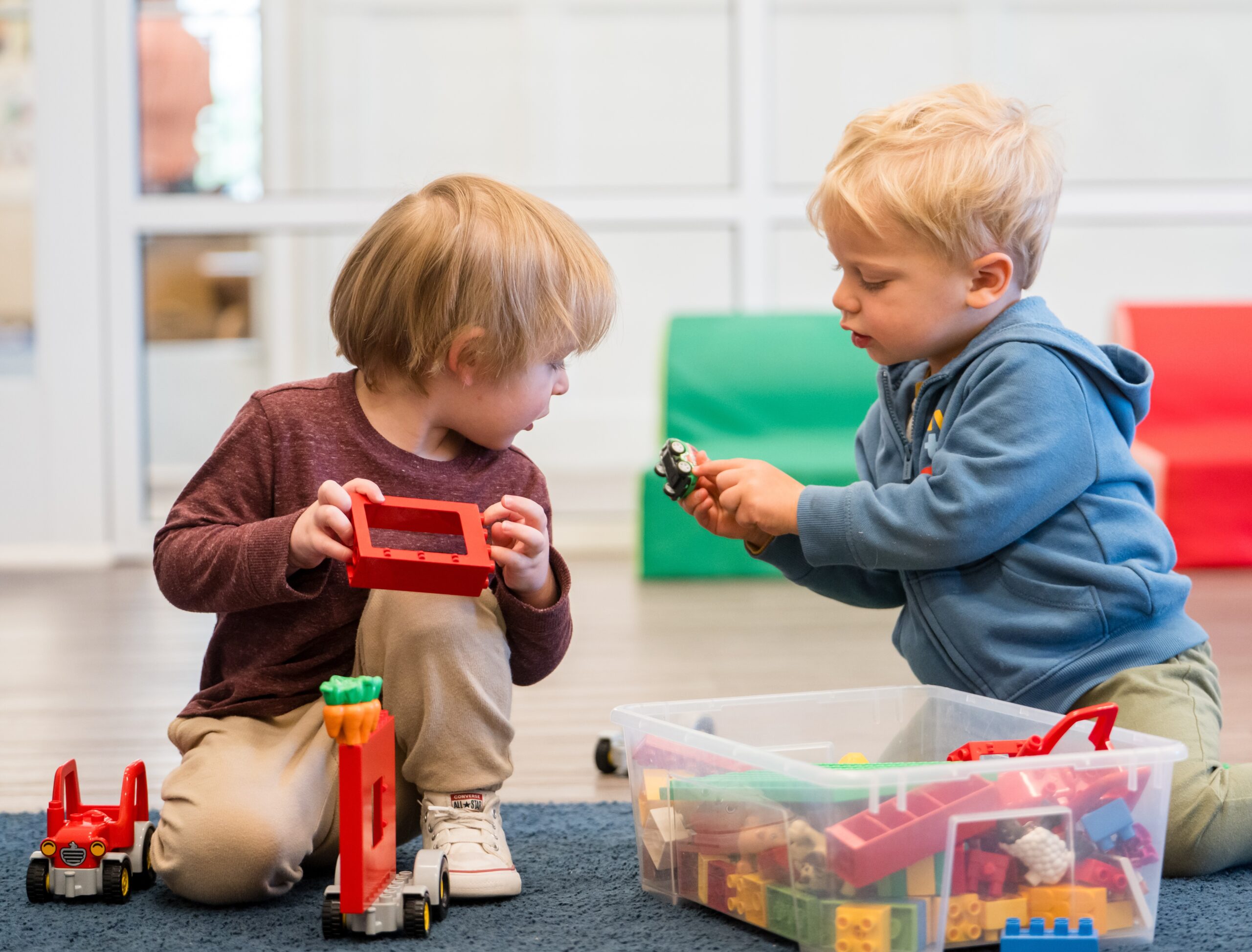
In preschool classrooms, social skills are practiced all day long through play, routines, and group learning experiences.
Children begin to read facial expressions, navigate shared materials, and express their needs in ways others understand. They learn how to participate in group settings, build early friendships, and move through small disagreements with support.
These everyday moments are what make preschool such an important setting for social and emotional development. Through repetition and familiar routines, children gain confidence in how they connect with others and begin to understand their role within a group.
Small Shifts That Support Social Skills
Many of the most meaningful ways to support social skills in preschoolers at home or in childcare are subtle. They come from how adults respond in everyday moments, not from structured lessons.
Here are a few insights that early childhood educators use every day in group classrooms:
- Pause before stepping in. Giving children a few seconds to navigate a situation on their own builds problem-solving confidence and encourages independent communication.
- Stay close, not over-directive. Sitting nearby during play offers reassurance without taking over. Children are more likely to engage socially when they feel supported but not directed.
- Model, then step back. Offering simple language like “Can I have a turn next?” gives children tools they can use immediately, and then space allows them to practice.
- Focus on reconnection. After a disagreement, gently guiding children back together helps them understand that relationships continue, even after a hard moment.
- Create repeated peer experiences. Seeing the same children regularly builds familiarity, which naturally leads to deeper interaction and friendship over time.
These approaches reflect what children experience in strong preschool, daycare, and childcare settings, including high-quality preschool programs designed to support social and emotional development.
How Teachers and Nurturing Adults Support Social Growth in Preschool
Children develop social skills not only through peer interaction, but through relationships with nurturing adults. When teachers model calm communication, patience, and empathy, children begin to mirror those behaviors. They learn what it feels like to be heard and supported, and they carry that understanding into their interactions with others.
This connection between children and caregivers is a core part of preschool social development. It creates a sense of belonging that allows children to engage more confidently with the world around them.
At The Gardner School, these relationships are built with intention. Teachers know each child, support their unique personality, and create space for connection to grow. Families often describe it as a place where children feel both safe and seen, and where everyday interactions support meaningful growth in early childhood development.
Key social skills preschoolers begin to develop include:
- Taking turns and sharing with peers
- Expressing needs and feelings through language
- Participating in group activities
- Navigating small conflicts with support
- Building early friendships through play
How Preschool Builds Social Skills That Last
Strong social skills developed in preschool support kindergarten readiness, confidence, and long-term success in school and relationships. These skills are not developed in a single lesson. They are built through hundreds of small interactions, shaped by warmth, consistency, and connection.
When children can engage with peers and caring adults each day, they begin to understand something deeper than sharing or turn-taking. They begin to understand relationships. And that understanding becomes part of the foundation they carry forward, in school, in friendships, and in life.
At The Gardner School, these moments are part of each day within our thoughtfully designed early childhood education program. Through meaningful connections with teachers and peers, children experience what it feels like to be known, supported, and included. In classrooms designed for calm, engaging learning, social growth happens naturally through play, guidance, and real interactions that build confidence over time. For all they will become.
Frequently Asked Questions About Social Skills in Preschoolers
Preschoolers develop social skills through everyday interactions with peers and nurturing adults. In a high-quality preschool or childcare setting, children practice communication, cooperation, and problem-solving through play, routines, and guided support.
Consistent relationships, repeated experiences, and opportunities to engage with others help children build confidence and learn how to connect over time.
Common social skills in preschoolers include taking turns, sharing with peers, expressing needs through language, participating in group activities, and beginning to navigate small conflicts with support.
These skills develop gradually as children gain experience interacting with others in both structured and unstructured settings.
Social skills are an essential part of early childhood development because they help children build relationships, communicate effectively, and feel confident in group settings.
Strong social development in preschool also supports kindergarten readiness and lays the foundation for future learning, collaboration, and emotional well-being.
Parents can support social skills by creating opportunities for conversation, shared play, and simple problem-solving during everyday routines. Small moments like reading together, building something as a team, or talking through feelings help children practice connection and communication.
Consistency and a calm, supportive presence make a meaningful difference over time.