You pick up your child and see paint on their sleeves. The artwork does not resemble anything specific. Parents may wonder, “What is process art in preschool?” or “How does messy art help my child learn?” The answer lies in early childhood development and the benefits of process art in high-quality preschool classrooms.
What Is Process Art in Preschool?
Process art in preschool focuses on the experience of creating rather than producing a finished product. It is an open-ended art form for toddlers and preschoolers that prioritizes exploration over perfection.
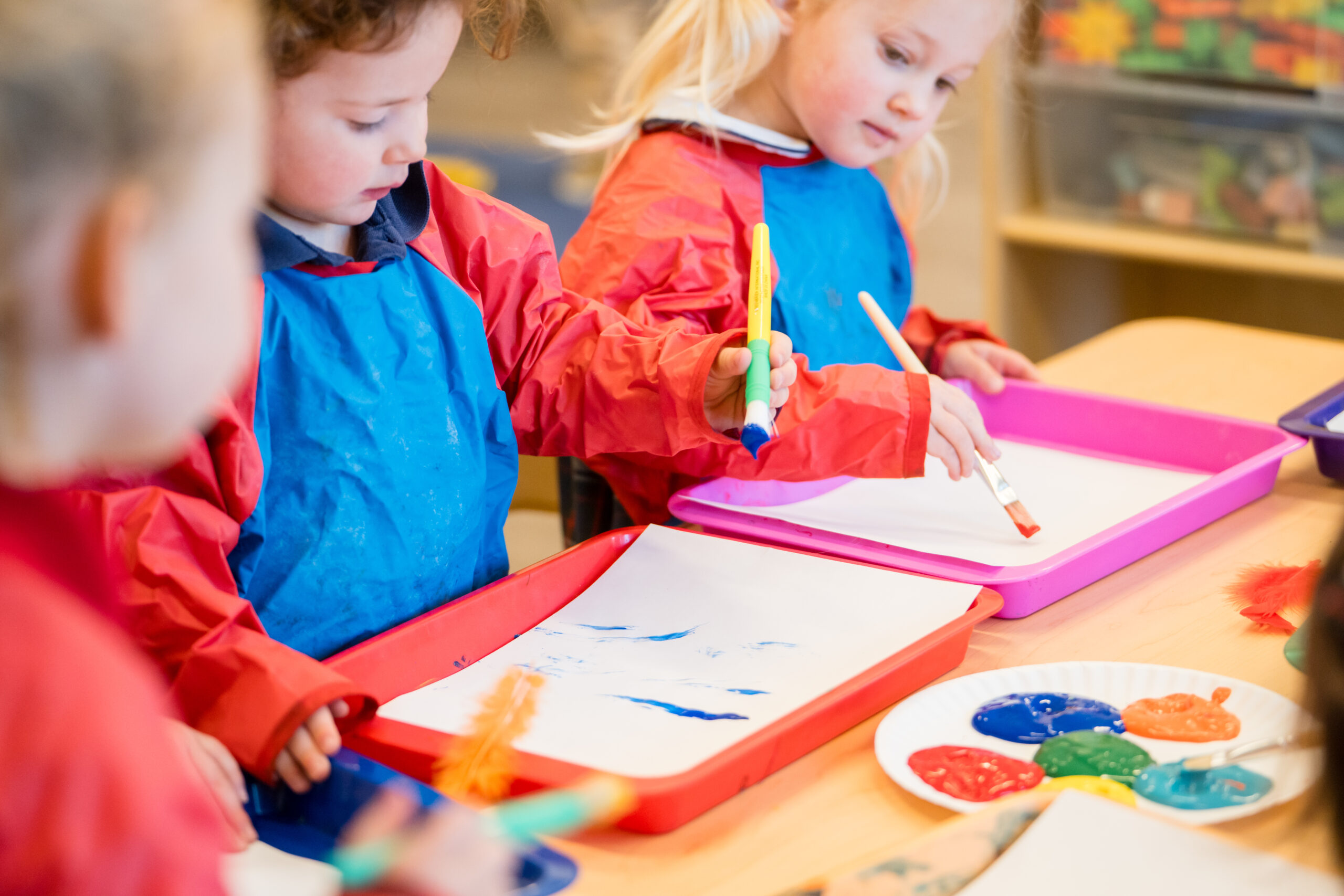
These preschool art activities are intentionally designed to support early childhood creativity and learning through play. In a high-quality preschool classroom, process art may include:
- Mixing paint colors
- Exploring clay textures
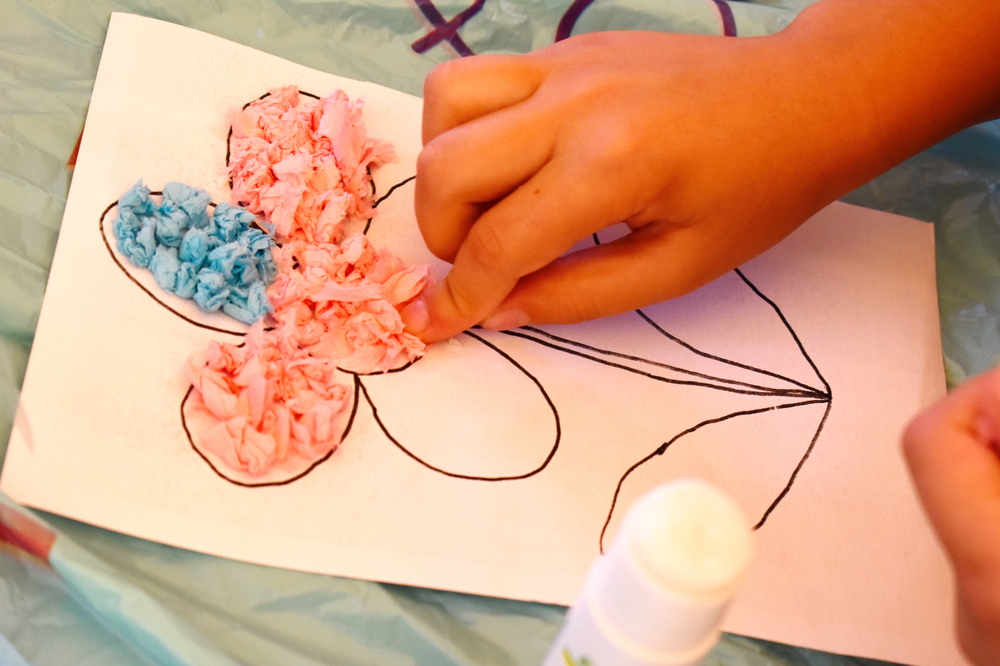
- Experimenting with collage materials
- Painting with different tools
Each creation is unique because learning happens during exploration.
Why Process Art is Important for Early Childhood Development
According to the National Association for the Education of Young Children, process art experiences support executive function, creativity, and problem-solving in early childhood.
Process art strengthens:
- Fine motor skills through grasping and manipulating art tools
- Hand-eye coordination during painting, cutting, and building
- Sensory integration through texture, movement, and hands-on exploration
- Language development when reflecting on and discussing artwork
When children manipulate materials during messy play, multiple areas of the brain are activated simultaneously. This supports neural connection growth and messy play brain development during critical developmental windows.
“It might look messy, but a lot is going on in those moments,” explains Chaya Swenson, Director of Academics and Learning at The Gardner School. “When a child experiments with clay or paint, they’re building coordination, confidence, and patience all at once.”
Process Art Builds Confidence in Young Children
Parents looking for ways to build confidence in preschoolers may not immediately think of art. Yet open-ended art experiences foster autonomy. There is no “right” way to create. That freedom reduces performance pressure and encourages risk-taking.
Teachers support growth by asking reflective questions such as:
- Tell me about your picture.
- What happens if you try that?
- How did you decide to use those colors?
- What would you like to try next?
This strengthens communication skills while reinforcing ownership and planning. These conversations also support fine motor development in preschool by connecting physical creation with verbal expression.
Why Quality Early Childhood Programs Prioritize Messy Play
Messy exploration supports sensory learning, persistence, and early childhood creativity. Research shows that preschool learning through play strengthens both cognitive flexibility and emotional regulation. Teachers often share that tactile experiences strengthen problem-solving skills in powerful ways. When children test materials and adjust their approach, they practice flexible thinking. Another important benefit is emotional regulation. Art provides a safe outlet for expression, especially for young children who are still developing verbal skills.
At The Gardner School, process art is part of our educational philosophy because it aligns with how children truly learn. Through hands-on exploration, guided reflection, and supportive teacher interactions, children build creativity and confidence that extend far beyond the art table. What may look messy in the moment is often meaningful growth in action.
Our classrooms are intentionally designed to enable children to fully engage in messy, hands-on learning, while families feel confident that exploration is happening in a safe, supportive environment led by experienced educators.
If you would like to learn more about how our classrooms support the whole child’s development through intentional experiences like process art in preschool, we invite you to explore The Gardner School or schedule a tour here.
Simple materials work beautifully. Washable paints, large paper, recycled cardboard, or even drawing with chalk outdoors create meaningful, open-ended art experiences. The goal is exploration, not a finished product.
Instead of asking, “What is it?” try, “Tell me about what you made.” Reflective questions support language development and confidence while reinforcing ownership of the creative process.
Yes. Process art activates multiple areas of the brain at once through sensory input, movement, and problem-solving. This type of messy play supports neural growth and fine motor development in preschool-aged children.
Regular exposure to open-ended art for toddlers and preschoolers helps build creativity, persistence, and independence. Even short weekly experiences can support early childhood creativity and learning through play.
Note: In early childhood education, process art refers specifically to developmentally appropriate art experiences for toddlers and preschoolers, not the mid-century art movement often referenced in art history.