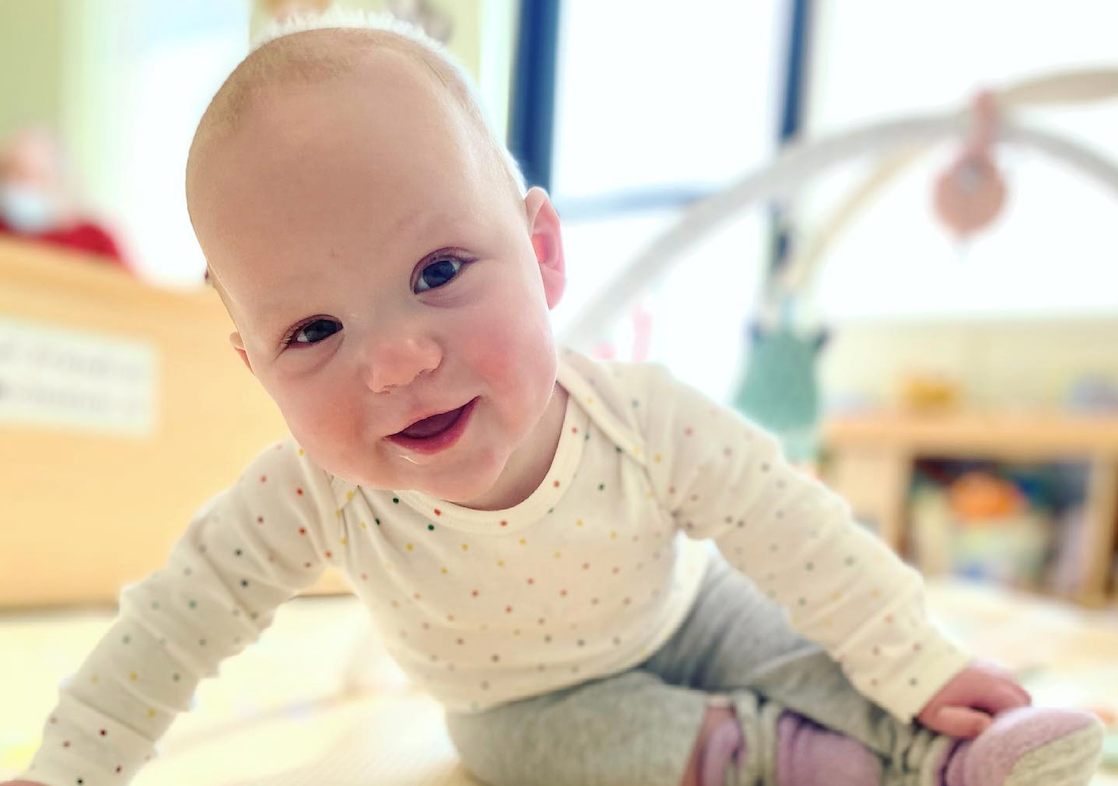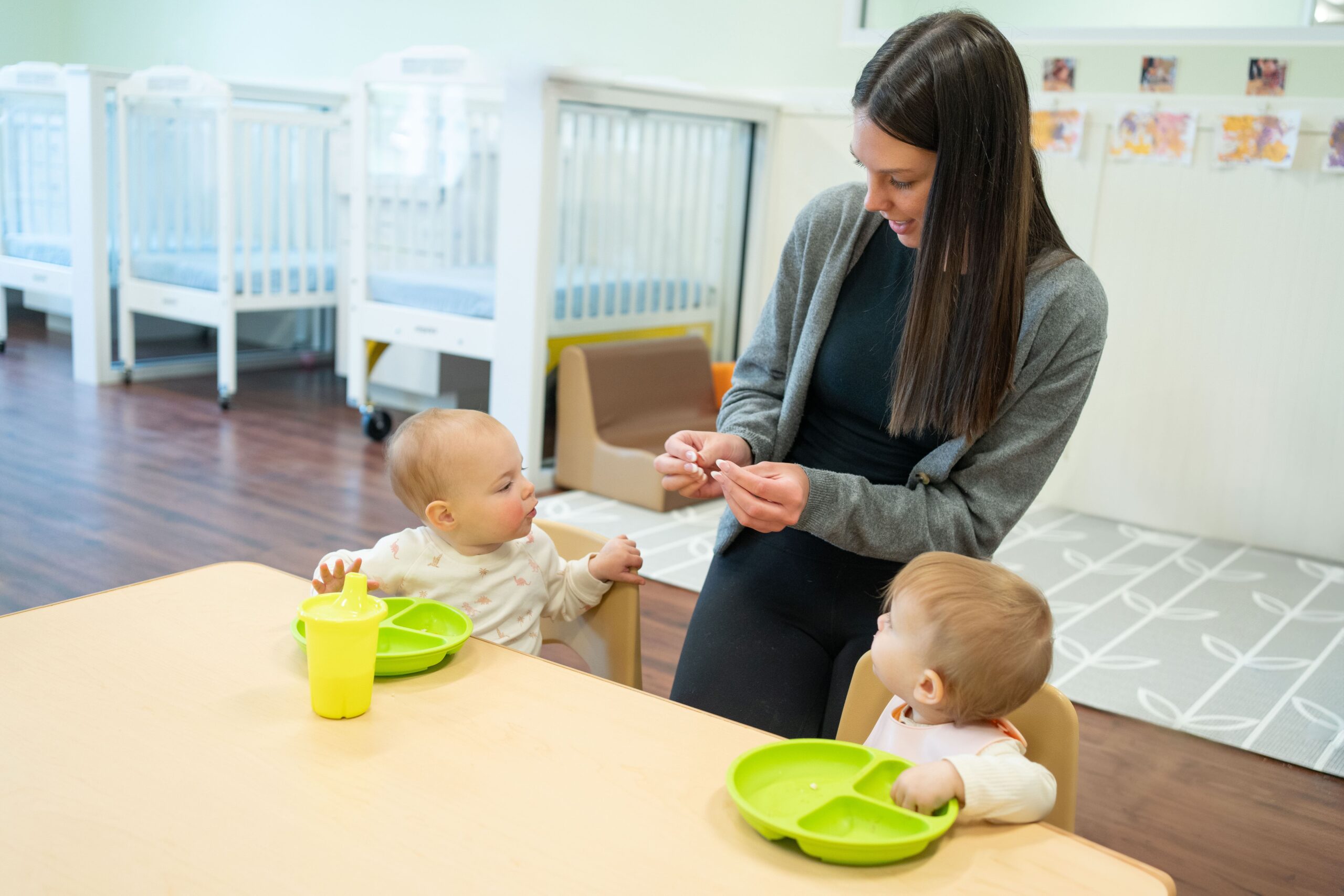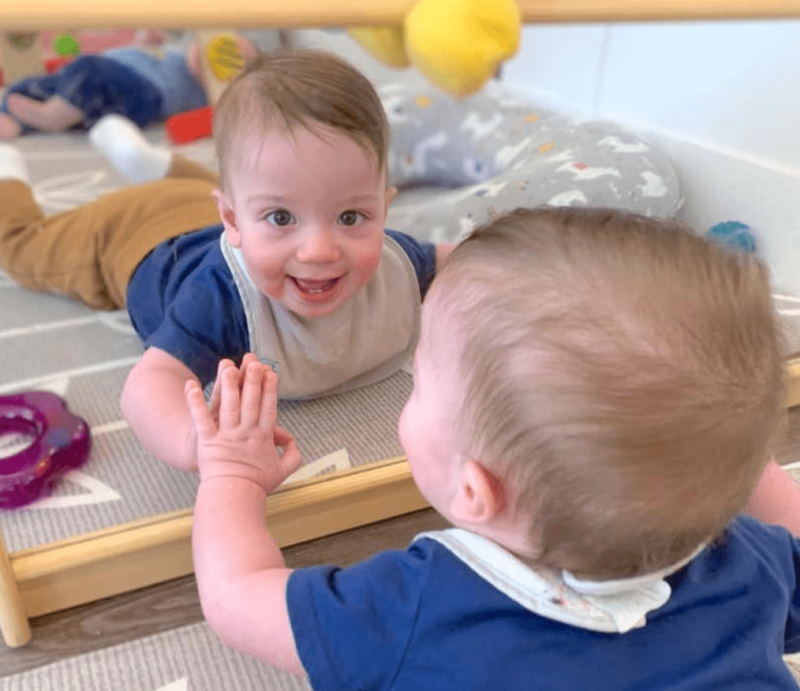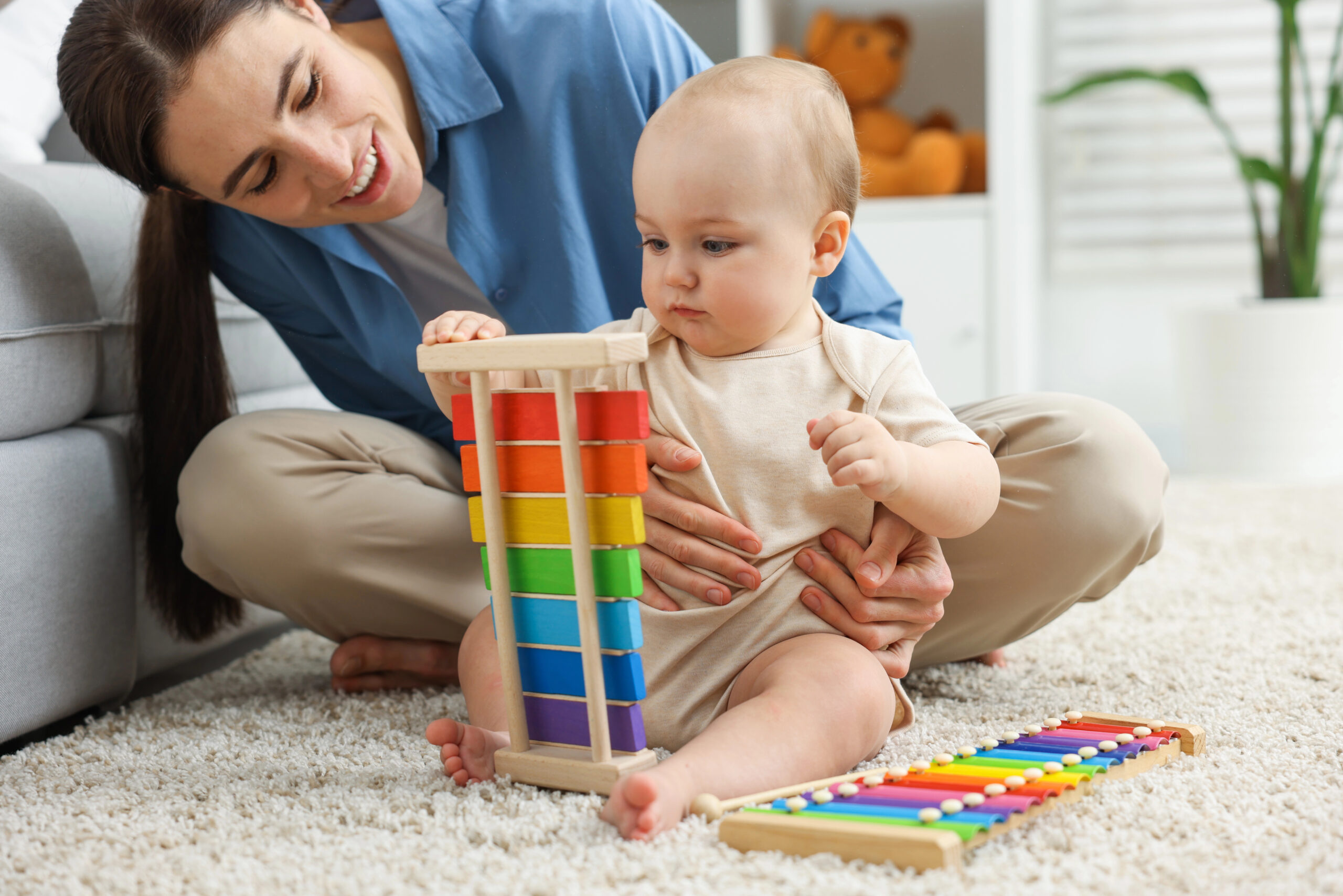
A baby reaching for a toy. A smile shared with a trusted teacher. Tiny fingers exploring a leaf for the first time. These moments may seem small, but they are doing important work.
Long before children take their first steps or speak their first words, they are building the foundation for confidence. Through movement, relationships, communication, and exploration, infants begin learning that they are capable, connected, and safe in the world around them.
Infant development happens through everyday experiences. The small interactions that fill a baby’s day help shape trust, curiosity, resilience, and a lifelong love of learning. At The Gardner School, we believe some of the most meaningful growth happens in these ordinary moments. They are the building blocks for all a child will become.
How Do Infants Build Confidence?
Confidence starts with connection. Before infants feel comfortable exploring their environment, they first learn to trust the people caring for them. Research from Harvard University’s Center on the Developing Child highlights the importance of responsive “serve and return” interactions, the back-and-forth exchanges between babies and caring adults that support healthy brain development and emotional security.
When a baby babbles and a teacher responds, reaches out and receives comfort, or shares a smile and sees one returned, they begin to understand something important: their actions matter. These consistent, nurturing relationships help infants feel secure enough to take risks, try new experiences, and explore their world with growing confidence.
“Many parents think confidence begins when a child takes their first steps or says their first words, but it actually starts much earlier,” says Sarah Smith, Executive School Director at The Gardner School of Lincolnshire (IL). “Every time an infant’s needs are met, their curiosity is encouraged, or a caregiver responds to their attempts to communicate, they are learning that they can trust the world around them. That sense of security becomes the foundation for confidence.”
Why Movement Matters for Infant Development
Parents often think about movement in terms of milestones like rolling, crawling, standing, and walking. What is sometimes overlooked is the role movement plays in confidence building. Purposeful movement experiences, including tummy time, stretching, infant yoga-inspired activities, and floor play, help babies discover what their bodies can do.
Each time an infant rolls toward a toy, pushes up a little higher, or reaches a new destination through crawling, they are practicing persistence and problem-solving. These experiences teach an important lesson: “I can do this.” Over time, those small successes become the foundation for confidence, independence, and resilience.
How Fine Motor Skills Support Confidence in Infants
Confidence is also built through tiny hands and everyday discoveries. Fine motor development begins early as infants learn to grasp objects, transfer items between hands, point, stack, and explore materials of different shapes and textures. While these activities strengthen coordination, they also encourage focus, determination, and curiosity.
Many parents are surprised to learn that fine motor experiences support cognitive development as well. Reaching for an object, manipulating a toy, or turning the pages of a board book requires infants to think, plan, and experiment. Every successful attempt encourages them to keep exploring.
Can Baby Sign Language Help Infants Communicate?
Communication begins long before spoken language. Many infant educators use simple baby sign language to help children express their needs and ideas before they can use words. Signs such as “more,” “all done,” and “milk” can provide infants with early tools for communication. For many families, these simple gestures become one of the first ways children actively participate in conversations with the people who care for them.
Being understood is a powerful experience. When infants can successfully communicate with trusted caregivers, they often experience less frustration and greater confidence. These interactions also strengthen relationships and encourage language development. Some research suggests that using signs alongside spoken language can support early communication by giving infants another way to connect with the adults around them. Parents who are curious about baby sign language can learn more here.
Baby sign language is not about accelerating milestones. It is about creating meaningful opportunities for connection and communication. Like so many aspects of infant development, it works best when it grows naturally through warm, responsive interactions and everyday moments together.
Why Sensory Play and Nature Exploration Matter for Infants
Infants learn through their senses. They learn by touching, listening, watching, tasting, and experiencing the world around them. Sensory exploration supports brain development while encouraging curiosity and engagement. This is one reason nature can be such a meaningful teacher.
Feeling grass beneath their feet, listening to birdsong, watching leaves move in the breeze, or exploring the texture of pinecones and flowers introduces infants to new sights, sounds, and sensations. Through age-appropriate outdoor exploration and sensory-rich learning opportunities, infants are encouraged to observe, investigate, and engage with the world around them. For a baby, these experiences are not ordinary. They are moments of wonder.
The Everyday Experiences That Shape Infant Confidence
Parents often wonder when confidence begins. The answer is earlier than most expect. It begins with a comforting voice. A trusted teacher. A successful reach. A new texture. A moment of discovery. A relationship built through consistency and care.
At The Gardner School, we know that confidence is not built on a single milestone. It grows through hundreds of small interactions that help infants feel safe, capable, and connected. These little moments may seem simple today, but they become the foundation for curiosity, resilience, communication, and learning in the years ahead. Because every smile, every discovery, and every nurturing relationship is helping shape who they are becoming. For all they will become.