

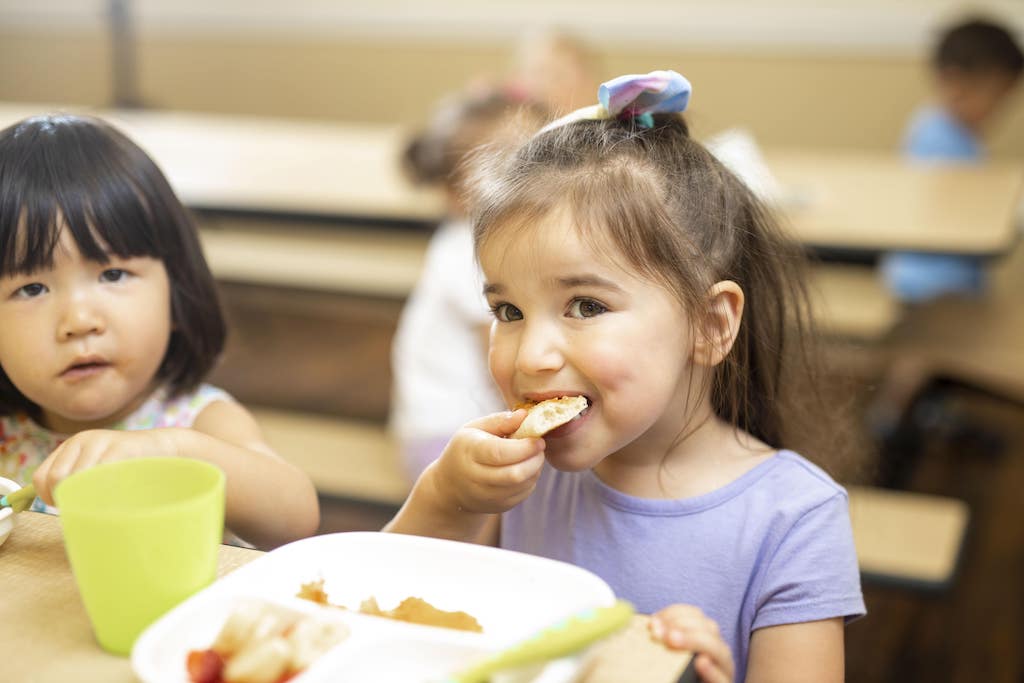
It’s no secret that most kids love snack time! And though breakfast, lunch, and dinner can sometimes require a little more persuasion, parents can attest to the importance of good nutrition and to the time and attention that goes into making sure children are properly fed. For kids with food allergies, however, meals and snack times have always required a bit more thoughtful planning and adaptation. FARE (Food Allergy Research & Education) has found that food allergies and food sensitivities have increased by 50% in the U.S. during recent years—a staggering statistic that should cause us all to pause and take note.
Since many of our students have allergies to certain foods they need to avoid, The Gardner School makes it a priority to provide a safe eating environment for all our students. Here’s how we help parents and kids feel secure during mealtimes.
We Collaborate on a Care Plan For Your Child
For children with food allergies, having a medical care plan is essential to making sure kids get the correct treatment in case of an adverse event. We ask parents to fill out a detailed medical care form, including information about the allergy and what to avoid, a list of symptoms to look for, and clear instructions for treating the allergy and what steps to take next. These care instructions are reviewed annually for any updates or changes.
Each child’s food allergy information is kept anywhere food is prepared and where children are eating, so that all teachers and staff members have access to this information. Additionally, parents can enter food allergies or sensitivities within our parent communications app, which prompts teachers and staff members with visible icons throughout each school day. When staff are trained about how to navigate your child’s allergy response plan, they sign it to indicate they’ve been prepped to respond.
We Keep Allergy Treatments Visible And Up To Date
In case of an allergic reaction, medication such as an EpiPen or Benadryl™ needs to be easily accessible and clearly marked. We regularly check the expiration dates on these medications to make sure they’re up to date. By pairing a medication chart with a picture of your child, we ensure the right medication for the right child during an adverse event. For example, at The Gardner School of Chicago-West Loop, a master list of all children with food allergies is placed in every classroom and in the kitchen where meals are prepared. Although allergic reactions rarely occur at school, we work hard to keep stringent safety policies in place to proactively prepare for such an occasion.
We Use Visual Aids To Separate Out Foods
Several of our locations use different colored plates to indicate dishes that never come into contact with common allergens. Color is a fun, easy way for kids with food allergies to know which dishes are safe without feeling excluded. For example, at The Gardner School of Eagan, children with food allergies use blue plates, while vegetarian students use green plates. This approach provides an easy visual reminder for our staff and teachers. Since so many of our little ones aren’t reading yet, color labeling communicates an important message without a single word.
We Provide A Healthy and Safe Environment for Food Allergies
When your little one has a food sensitivity, you’re very aware of ingredient lists, food additives, and homemade goodies. You’re not afraid to ask for more information about where a food item came from or how it was made. After all, your child’s health depends upon your awareness and vigilance.
At The Gardner School, keeping children safe is also our top priority—especially when it comes to food allergies. Contact us to learn more or to schedule a virtual tour at The Gardner School nearest you.