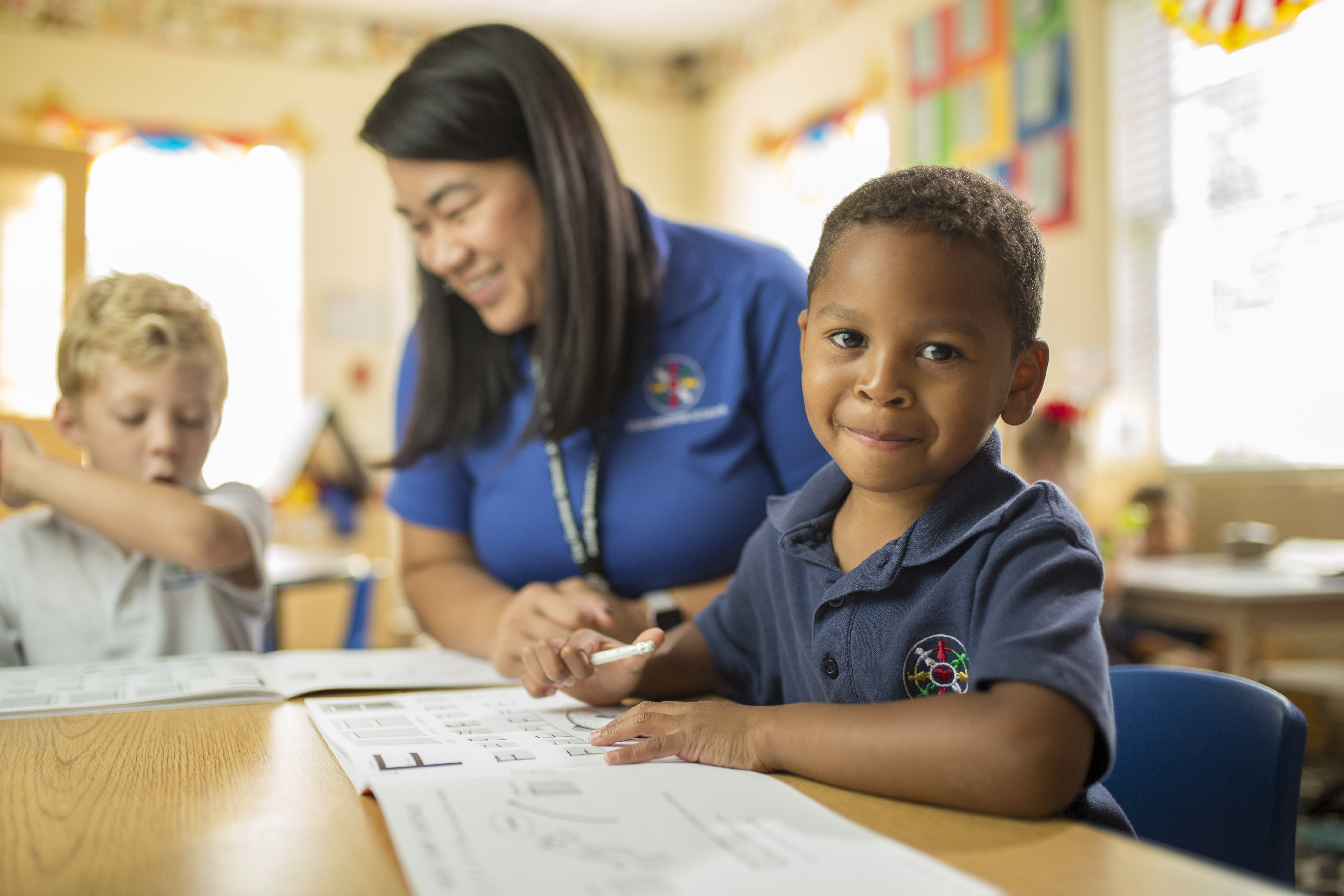
Most parents imagine early literacy beginning with letters and sight words. A child carefully sounding out sounds. A worksheet with neatly traced lines. A backpack filled with beginner readers. Early literacy begins long before kindergarten through conversation, storytelling, play, and early writing experiences that help children build language, comprehension, and confidence.
In high-quality preschool environments, language development is nurtured long before formal reading instruction ever begins. Early literacy in preschool is not about pressure. It is about connection.
Simple ways to support early literacy include:
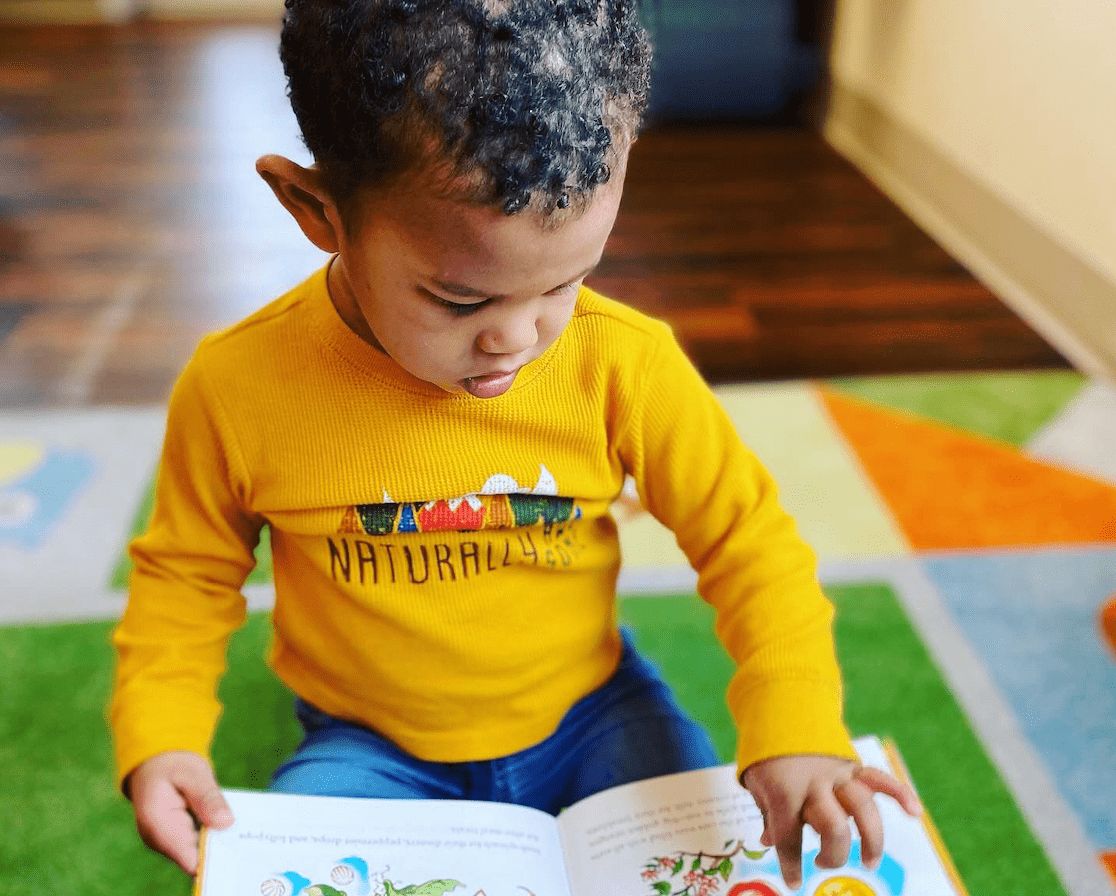
- Reading together and talking about pictures
- Encouraging children to tell stories about their day
- Singing songs and repeating rhymes
- Providing opportunities to draw and “write” freely
- Engaging in pretend play that builds storytelling
How Conversation Builds Early Literacy Skills
Long before children can read words, they are building the skills that make reading possible. Every time a toddler tells a story about their stuffed animal or answers a teacher’s question about their drawing, their vocabulary and comprehension are growing.
The National Association for the Education of Young Children explains that reading together and engaging children in conversation are powerful ways to support early literacy. They emphasize that shared reading, talking about pictures, and encouraging children to ask questions all build the foundation for later reading success.
In a strong preschool classroom, teachers intentionally create space for dialogue. They ask open-ended questions. They pause to listen. They expand on children’s ideas. These everyday exchanges are a key part of early literacy development in preschool.
One insight that early childhood educators understand well is the power of retelling. When children “read” a familiar book from memory or narrate what they see in pictures, they are practicing sequencing, comprehension, and expressive language. These early skills quietly support future reading confidence.
How Early Writing Develops in Preschool
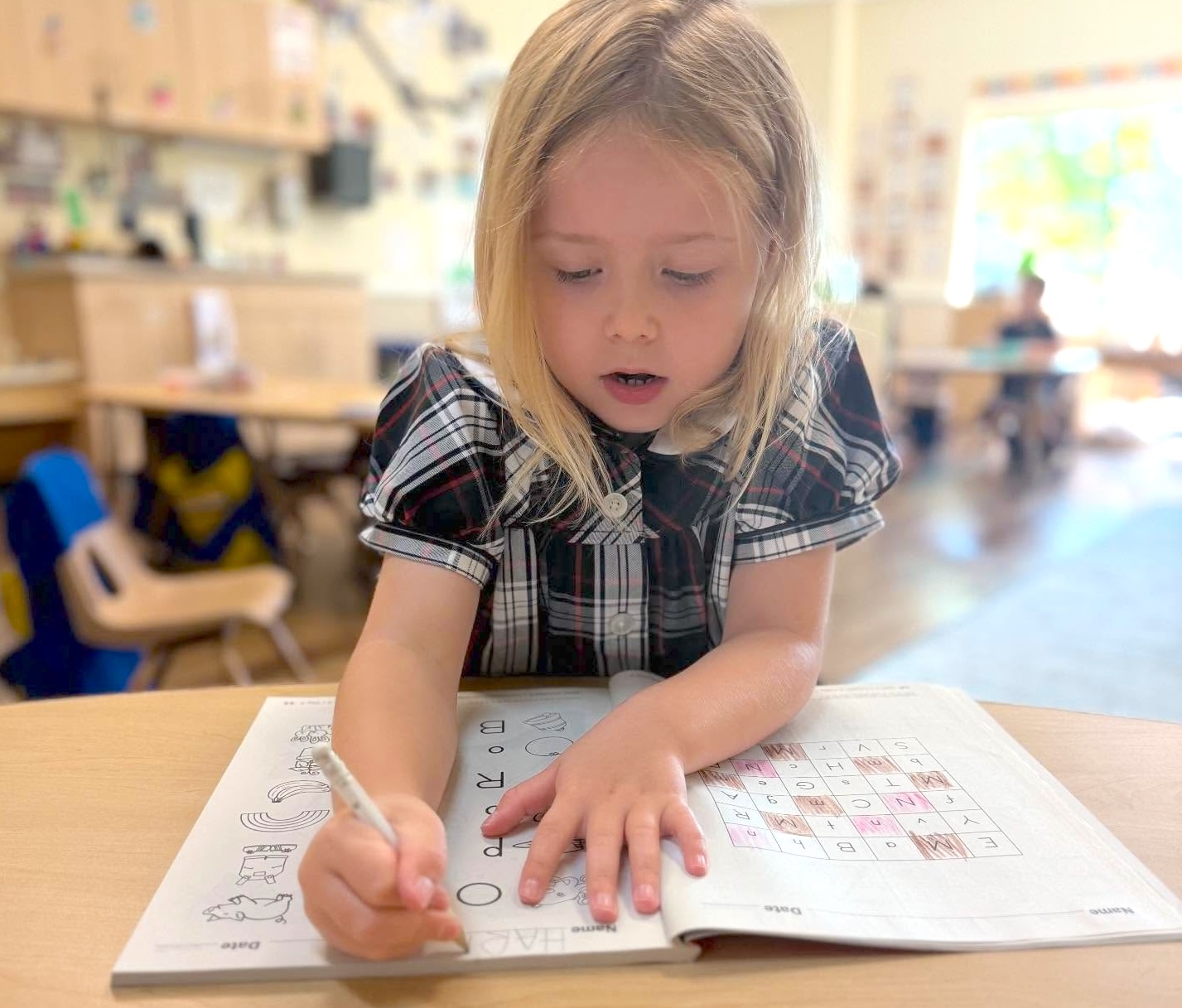
Those early marks on paper are not random. When toddlers and twos begin to draw lines and shapes, they are learning that symbols carry meaning. Over time, scribbles evolve into letter-like forms and eventually into recognizable letters. This natural progression is part of early literacy development in preschool.
In preschool writing centers, the goal is exploration, not perfection. A child labeling a drawing with invented spelling is experimenting with how language works. That experimentation builds confidence and curiosity.
Music also plays an important role in early literacy. Songs and nursery rhymes help children hear patterns and rhythms in language. This builds phonological awareness, helping children recognize sound patterns that are essential for learning to read.
How Pretend Play Supports Language and Storytelling
Pretend play is one of the most powerful and often overlooked literacy tools in early childhood development. When children act out a veterinarian visit or a favorite bedtime story, they are building narrative skills. They learn that stories have a beginning, middle, and end. These experiences strengthen early literacy skills through play.
In preschool programs that value dramatic play, storytelling, and shared reading, early literacy grows naturally. It feels joyful rather than pressured. That positive association with language matters.
Everyday Moments Support Early Literacy Development
Early literacy development happens during bedtime stories, during classroom conversations, and during those proud moments when a child explains their artwork in detail.
At The Gardner School, our preschool classrooms are designed to nurture language development through meaningful interaction, music, storytelling, play, and a print-rich environment where children are surrounded by books, labels, and written language throughout the day. We believe childcare environments should support children as communicators and thinkers even before they begin reading independently.
“Early literacy is not something we teach in isolation or soley on an individual basis,” says Marilynn Mason, Executive School Director at The Gardner School of Ashburn (VA). “It grows through conversation, play, and meaningful interactions that happen throughout the day.”
These early skills quietly support kindergarten readiness. Confident readers are not built through memorization alone. They are built through early literacy experiences rooted in connection. From scribbles to stories, each small moment builds the foundation for all they will become.
If you would like to learn more about how our preschool programs support early literacy through everyday moments, we invite you to schedule a tour and see the difference we are making for young learners.