

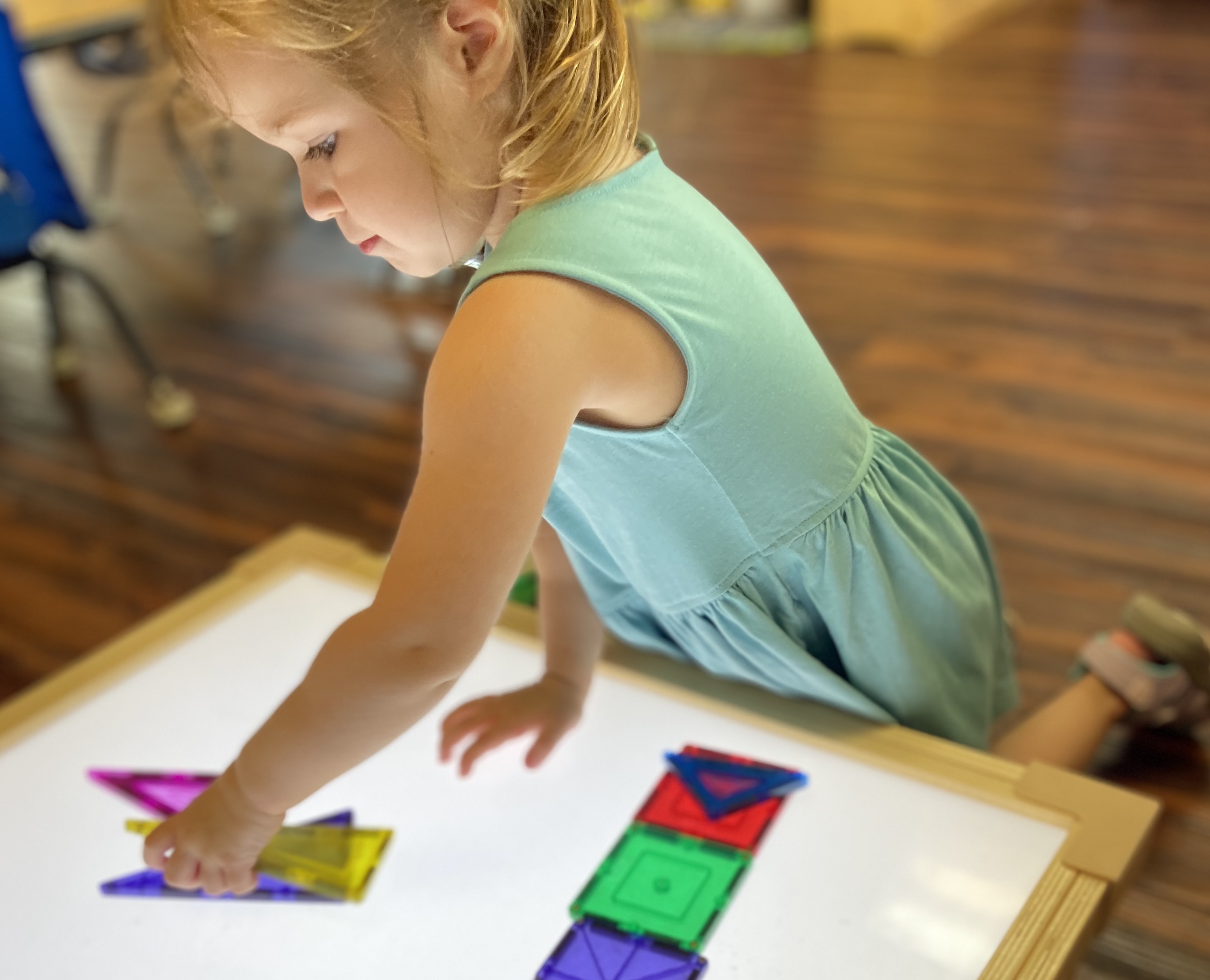
Our research-based curriculum focuses on engaging S.T.E.A.M. activities that our students love and look forward to. We get our hands dirty, discover new ideas, and play—all while learning new concepts. The S.T.E.A.M. activities that we do in our TGS classrooms can also be done at home so that you and your little one can explore together! To give you a few ideas, and to illustrate what we’re learning in class, we’re sharing three of our S.T.E.A.M. activities that you can recreate at home with basic household items.
3 S.T.E.A.M. Activities You Can Do at Home
1. Elephant’s Toothpaste at TGS Glenview-Northbrook
Also called the Marshmallow Experiment, Elephant’s Toothpaste is made by mixing dish soap, yeast, water, and hydrogen peroxide. The decomposition of the hydrogen peroxide creates a fun, foamy substance. Each bubble of the foam is filled with oxygen, as the yeast in the mixture helps to remove the oxygen from the peroxide rapidly. This all happens so fast that it even creates heat.
This engaging S.T.E.A.M. activity teaches chemistry concepts that your child can see right before their eyes. Make sure you try this one on a washable surface in your home, and have fun!
Try it at home—You’ll find the full recipe and easy-to-follow directions to make Elephant’s Toothpaste on Scholastic’s website.

2. Terrariums at TGS Franklin
With soda-bottle terrariums, you and your child can garden together—no matter the weather. This project takes as little as four supplies: a plastic soda bottle, small plants, potting soil, and pebbles. Terrariums are a great way for your child to learn about ecosystems, and they will love watching their plants grow.
Try it at home—You can recreate this project at home with just a few simple materials that you likely have in your home already. Watch this quick one-minute video to learn how to build your terrarium.
3. Rainforest Trees at TGS Naperville
Inspired by Bill Martin Jr.’s book Chicka Chicka Boom Boom, this S.T.E.A.M. activity teaches engineering principles. In this fun-to-read children’s book, a few letters of the alphabet decide to go to the top of a coconut tree. Soon, the rest of the letters decide to join them, and the tree breaks under the weight, sending the letters back to the ground. This activity is a tactile way for toddlers to imagine their own Chicka Chicka Boom Boom tree.
Try it at home—Recreating this hands-on activity is a breeze. Start with one sheet of construction paper as your child’s canvas. Cut a long strip of brown construction paper to make the trunk of the tree, and glue it on in the center of the page. Now, cut your leaves and coconuts and glue those on top of your trunk. Your child can use paint, letter cut-outs, or even alphabet magnets to add their letters to the top of the tree.
Work through this project as you read the book, and discuss how the letters’ weight could make the tree fall. Incorporating a paper craft activity into storytime is a wonderful way to help children remember concepts easier and practice their listening skills.
The Importance of S.T.E.A.M. Learning
As the job market sees a skills gap in S.T.E.A.M. professions, The Gardner School focuses heavily on these concepts to prepare students for their brightest futures. We immerse students in a world of new ideas to spark their curiosity and help them explore their interests. Hands-on learning activities are an excellent tool for S.T.E.A.M. learning, and our teachers are continuously coming up with new and exciting project ideas.
If you’re looking for at-home activities for your child or more childhood development resources, The Gardner School shares early childhood development tips and activities on our blog and our Pinterest profile. You can also follow our hashtag, #TGSatHome on Facebook and Instagram.