

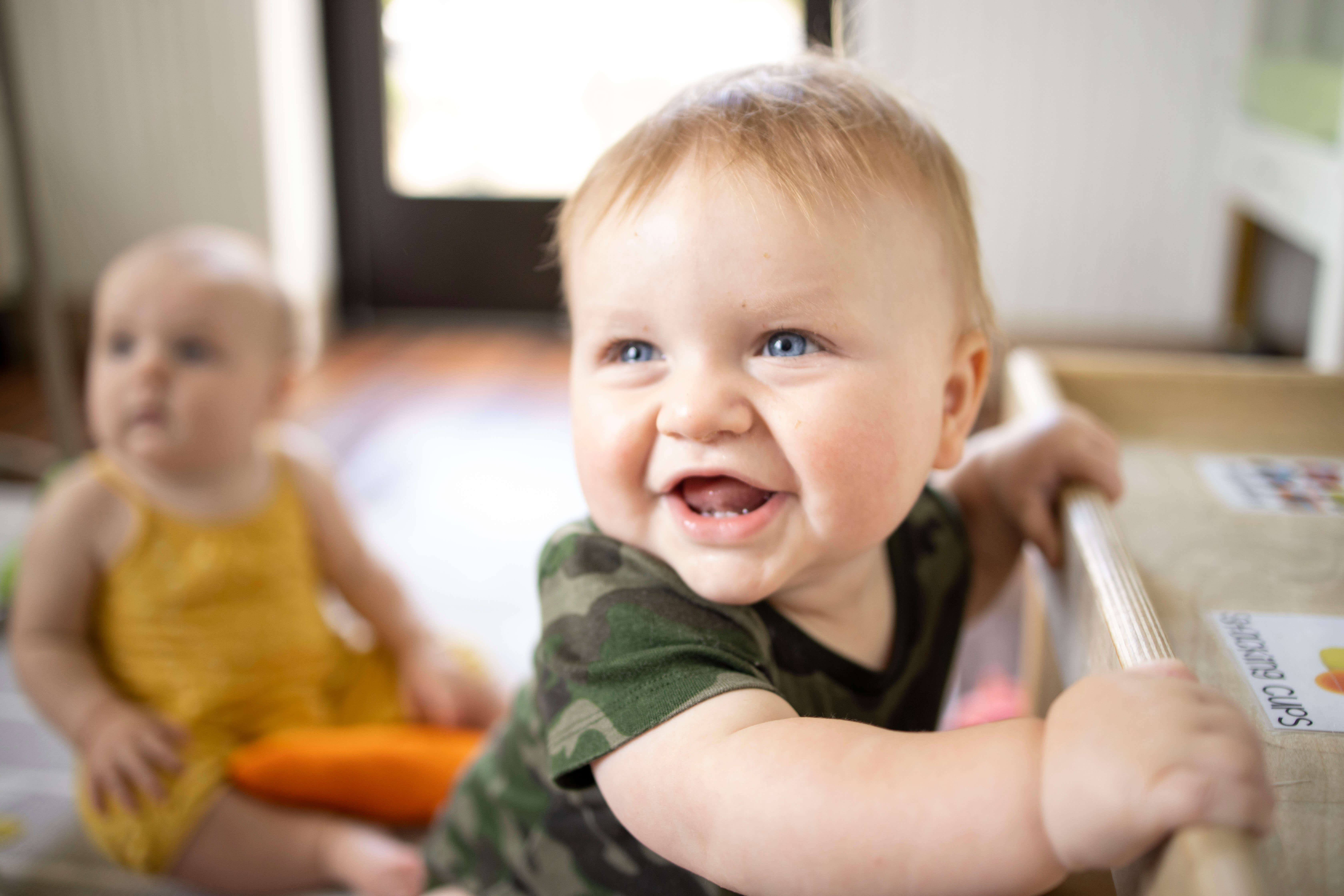
Is your baby sitting and pulling up on their own? If so, they might be on their way to taking their very first steps! Though every child will progress at his or her own pace, there are a few things you can do to encourage your baby as they learn to walk.
Here are six ways that you can help strengthen your baby’s muscles, while encouraging and empowering them to walk on their own.
1. Practice without shoes.
Learning to walk without shoes can help your little one develop the muscles in their feet and ankles. Walking barefoot helps their arches develop and improves balance and coordination. It also allows them to sense the ground under their feet, helping them to feel where they’re going rather than looking down to see.
Shoes can also change the way your child uses their muscles while walking—think of a high-top shoe that supports their ankles—and can slow the overall development of their walking skills. If barefoot isn’t an option, you can also try lightweight, flexible shoes.
2. Encourage cruising.
Stand your baby next to a piece of furniture. While they hold onto that with one hand, hold their other hand for balance. As they slowly become more comfortable, they will let go of your hand to try balancing with only the furniture as support. This exercise can go a long way in helping your child to gain confidence in walking on their own.
3. Limit the use of a walker.
Though many feel as though walkers improve a child’s ability to walk, they can actually “eliminate the desire to walk” and impede development, according to the Mayo Clinic. If you use a walker, limit the child’s time and do not use around steps or uneven floors.
4. Use a push toy.
Try giving your child a push toy with evenly distributed weight and a handlebar (i.e., a toy shopping cart or lawnmower). This type of toy is less likely to fall under your child’s weight, so it allows them to lean forward on the handle to gain control as they walk. This exercise is similar to having them hold onto your hands or furniture; however, each position helps them strengthen different muscles in their legs, abdomen, and arms.
5. Add prizes to the trail.
When your baby was learning to crawl, did you put toys just out of reach so that they would be encouraged to move forward and grab them? The same concept works here. Leave a trail of their favorite toys along the way to motivate them to move forward. Make sure that the prize you’ve set up has ample support around it, such as furniture, for your little one to grab onto along the way.
6. Try adding kicks.
For a little added practice with balance and strength, place a plush ball in front of your child’s feet as they’re walking with support. They will kick the ball by accident at first, but after noticing it, they may be enticed to continue kicking. You can then place the ball for them to kick on each side as they move along.
If you’re still looking for at-home activities for your child or more childhood development resources, we hope you’ll explore our early childhood development tips and activities on our blog and our Pinterest profile. You can also follow our hashtag, #TGSatHome on Facebook and Instagram.