The adage “It’s as easy as ABC” is often used by people who want to emphasize how simple a task is. Yet, as you watch your child learn the building blocks of language, you may want to alter that old saying. Far from being easy, comprehending and acquiring language is one of the most complicated tasks little ones accomplish.
The same is true for understanding numbers and counting. Although your child may understand “more cookies” or “no more trucks” at an early age, it takes time for toddlers to connect individual items to abstract linguistic concepts like “one,” “two,” or “three.”
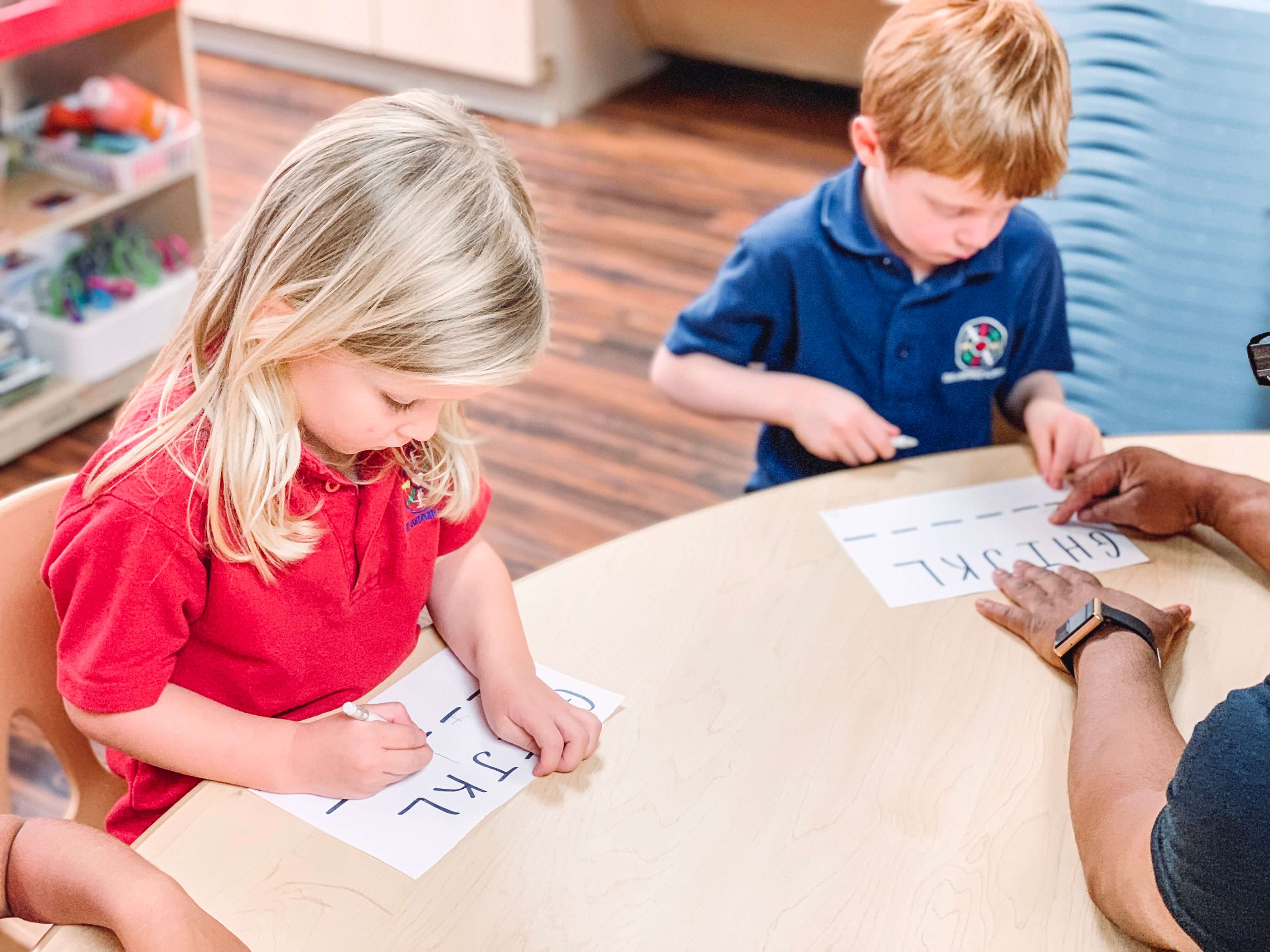
As your child grows, he may show an interest in handwritten or typed words. His finger may linger on a capital letter while you’re reading, or she may imitate counting when she’s moving her toys from one spot to another. These behaviors may signal that your kiddo is ready to learn more about language and counting. You may wonder how you can integrate these concepts into daily life when you’re busy dressing, bathing, and feeding your wiggly little one. Here are three tips for helping your child explore letters and numbers at her natural pace.
1. Surround your child with letters and numbers.
There’s a reason letter and number-based art is so popular in preschool decorating schemes. Early exposure to letters and numbers can pique your child’s interest in these strange squiggles. Decorate the nursery with colorful alphabets and numbers up to ten. Don’t forget about art that turns your child’s name into a visual feast for the eyes. Seeing this prominently displayed will help children gain familiarity with the individual letters that make up their names. Like all humans, a personal connection to a concept always helps make learning easier and more enjoyable. The same is true for kids, as well!

2. Let your child play with letters and numbers.
Letters and numbers aren’t just decor; they can also offer a great opportunity for playing. You’re probably familiar with the classic “alphabet blocks” that you may have played with when you were a child. Although they’ve been updated for today’s kids, the concept is still sound. There are now multiple apps for a tablet or a smartphone that can engage a child’s interest in learning as well. However, during the toddler years, you’re looking to increase familiarity with letters. Using stacking blocks will ensure your child will start to literally build with letters before they start using them to build words.
You can use numbers in a similar way, by investing in magnets or carved wooden numbers that kids can integrate into daily play. At first, the number 6 may go on adventures with the number 4. That’s great! Increasing a child’s comfort level with numbers will make her feel like old friends once she’s ready to begin counting objects around her.
3. Integrate letters and numbers into your child’s daily routines.
It’s easy to take a few moments during many daily activities to introduce the alphabet or numbers. For example, when placing mittens on your child’s hand, you can narrate aloud as you’re helping him dress. Say, “When we’re going outside, we wear our mittens. Two mittens!” As you place each mitten on his tiny hands, say, “One mitten is on your hand. Now two mittens are on your hands. One, two. Two mittens!” You can also point out things you might see in the park or on the playground. You might say, “There is one person on the slide!” or “There are two dogs crossing the street!” Eventually, your child will be able to connect these words to the numbers they represent.
Integrating letters into your child’s daily routine can be just as fun. You can use ketchup to “write” the first letter of your child’s name on his or her plate for dinner. Syrup can be used the same way on pancakes on a Saturday morning. Also, taking time to spell aloud their favorite toys or activities can help children link letters to the activities they love best.
Preparing Your Child for Kindergarten
The Gardner School encourages early exposure to letters and numbers in order to jumpstart learning, enhance problem solving skills, and assist in language development. It’s the reason letter recognition and counting skills are fundamental components of The Gardner School curriculum. With a healthy mix of structured enrichment and free play, we give children the guidance they need to start learning as soon as they’re ready. To learn more about the advantages of an academic preschool, visit our website or schedule a tour today.