

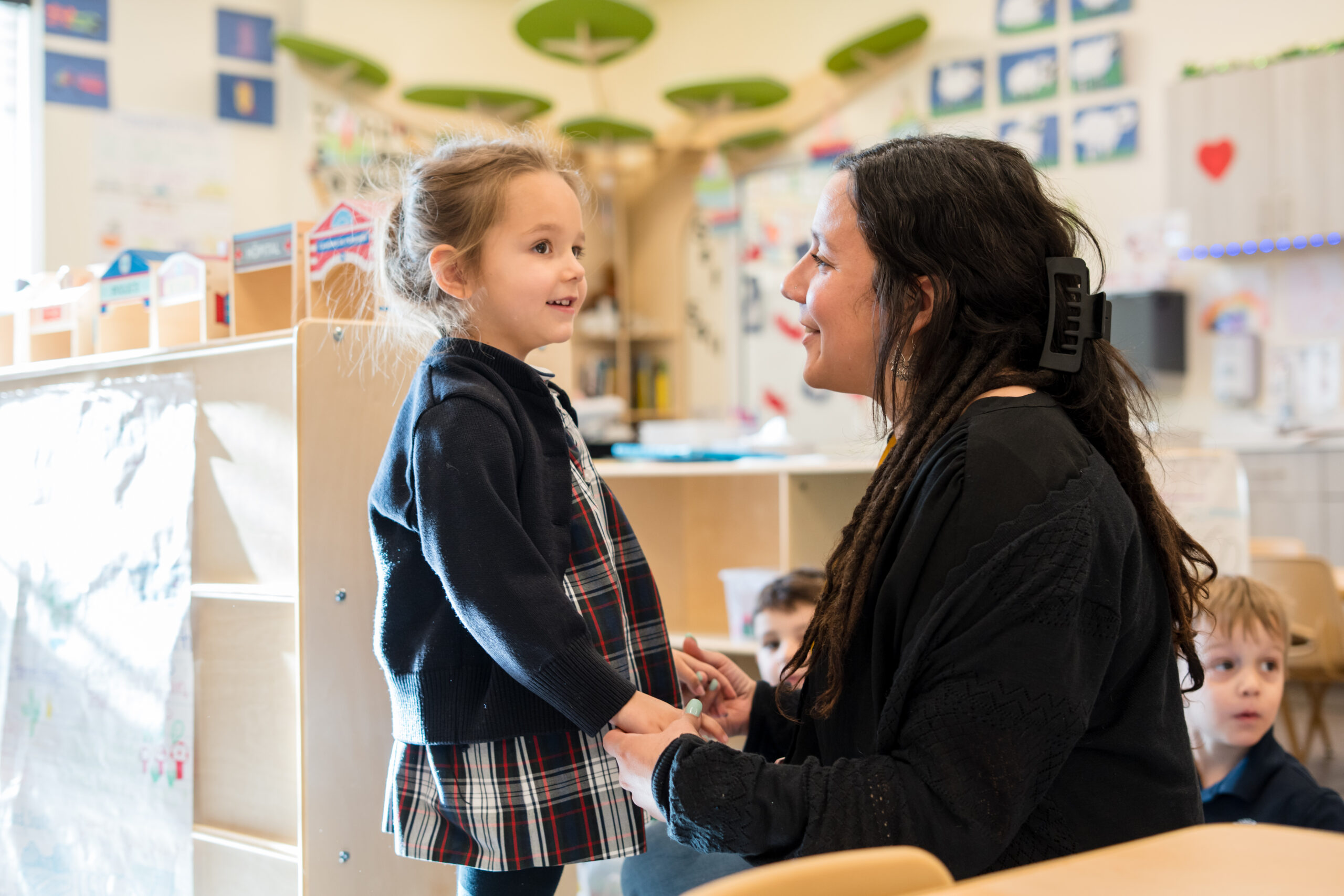
One of the most common questions parents ask is, “How do I know if my child is ready for preschool?” It’s an exciting milestone, and it’s natural to wonder whether your child is prepared for this important next step.
The good news is that preschool readiness isn’t about memorizing the alphabet or counting to 20. It’s about helping children build confidence, curiosity, and the everyday skills that allow them to feel comfortable exploring a new environment, forming new friendships, and growing more independent. Every child reaches these milestones at their own pace, and with thoughtful preparation, the transition into preschool can become an exciting experience for the whole family.
1. Introduce Preschool Through Stories and Play
Young children make sense of new experiences through stories, pretend play, and conversation. Introducing the idea of preschool before the first day helps it feel familiar and gives children time to imagine what their new routine might look like.
Reading books together about starting school creates natural opportunities to talk about teachers, making friends, classroom activities, and returning home at the end of the day. Favorites like Llama Llama Misses Mama and Chu’s First Day of School help children see that it’s perfectly normal to feel both excited and uncertain about something new.
Pretend play is another wonderful way to prepare. Take turns being the teacher and the student, practice hanging up a backpack, washing hands, gathering for circle time, or saying goodbye at drop-off. As your child leads the play, you may discover what they’re curious about and what already makes them feel confident.
2. Build Simple Routines That Encourage Independence
Predictable routines help children feel secure because they know what to expect. They also create opportunities to practice the small acts of independence that become part of everyday preschool life.
A few weeks before preschool begins, gradually introduce a morning routine that includes getting dressed, eating breakfast, putting on shoes, and carrying a backpack. If time allows, build in a few quiet minutes to read a favorite book or enjoy a morning cuddle. That connection before separation often helps children begin the day feeling calm and confident.
Early childhood educators also know that the little moments of independence make a big difference. Allowing your child to pull up a zipper, put away a cup, wash their hands, or carry their own backpack helps build confidence one small success at a time. A favorite stuffed animal or family photo during the drive to school can also provide reassurance as your child adjusts to a new routine.
3. Make Space for Every Feeling
Starting preschool often brings a mix of emotions. Your child may feel excited one moment, curious the next, and a little nervous before the first day arrives. Those changing feelings are a normal part of any big transition.
Rather than trying to solve every worry, create space for your child to talk about what they’re feeling. Responses like “It sounds like you’re wondering what your classroom will be like,” or “I can tell you’re excited to meet new friends,” let children know their emotions are welcome. Feeling understood helps children develop the confidence to step into new experiences.
Many families also find that a consistent attendance schedule helps children settle into preschool more quickly. Familiar routines, caring teachers, and seeing the same friends throughout the week can create a comforting sense of predictability as children build trust in their new environment.
4. Remember That Preschool Readiness Is About More Than Academics
It’s natural to wonder whether your child knows enough letters, numbers, or colors before preschool begins. Experienced early childhood educators know that some of the strongest signs of preschool readiness have much more to do with social-emotional growth, communication, and confidence than early academic skills.
Children are developing preschool readiness when they begin to:
- Explore new activities with curiosity
- Follow simple routines
- Communicate their needs
- Practice sharing and taking turns
- Recover after small disappointments
- Feel confident trying something new
We know that school readiness includes social-emotional development, communication, self-help skills, and opportunities to learn through play alongside early academics. These foundational skills continue to grow every day in a nurturing preschool environment where children feel safe, supported, and encouraged to explore.
A Confident Beginning Starts With Caring Relationships
Starting preschool is an exciting milestone for children and parents alike, and every family’s journey looks a little different. At The Gardner School, we believe children thrive when they feel known, valued, and supported by caring educators who partner closely with families.
From the first day of school, our teachers create warm, engaging classrooms where children build confidence, develop friendships, discover new interests, and experience the joy of learning every day. It’s all part of providing a nurturing start for a successful future, for all they will become.
If preschool is on the horizon for your family, we’d love to help you learn more about our programs or schedule a tour.